


ON THIS PAGE
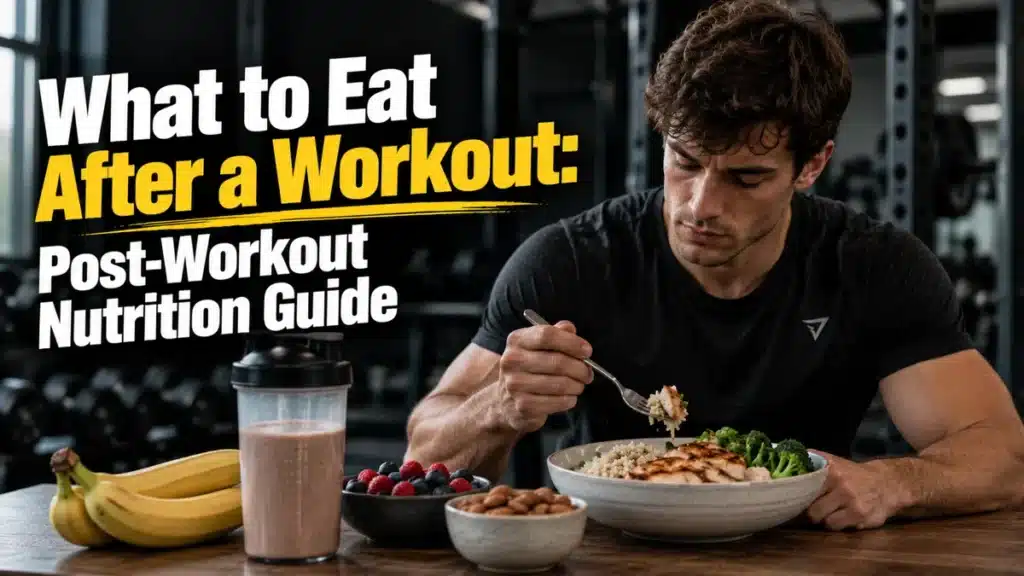
After a workout, eat a meal or snack that combines 20 to 40 grams of high-quality protein with some carbohydrates, and drink enough fluid to replace what you lost in sweat. Good examples are Greek yogurt with fruit and oats, chicken with rice and vegetables, eggs on wholegrain toast, or a protein shake with a banana. Eating within a couple of hours is sensible, but your total daily protein and calories matter far more than hitting a narrow window.
Post-workout nutrition is surrounded by myths, from the 30-minute “anabolic window” to the idea that fat ruins recovery. This guide explains what actually happens in your body after training, how much protein and carbohydrate you need, which foods work best, and how to adjust your post-workout meal for muscle gain, fat loss or endurance.
This article is informational and not a substitute for individual medical or nutrition advice.
Why What You Eat After a Workout Matters
Training is a stimulus, and recovery is where the results happen. After a workout, your body has three main jobs: repairing and building muscle protein, refilling the glycogen (stored carbohydrate) you used for fuel, and replacing the fluid and electrolytes you lost in sweat.
Protein supplies the amino acids your muscles need to repair and grow. Carbohydrates refill glycogen so you have energy for your next session. Fluids restore hydration. A good post-workout meal covers all three, and that is why the best choices are usually ordinary, balanced meals rather than special recovery products.
Is There Really an “Anabolic Window”?
For years, lifters were told they had to drink a protein shake within 30 minutes of training or lose their gains. The evidence does not support such a strict window. In a widely cited review, Aragon and Schoenfeld concluded that the post-exercise “window” is much wider than once believed, and that what you ate before training largely determines how urgent your post-workout meal is.
If you had a protein-containing meal one to three hours before your workout, amino acids are still circulating while you train and for some time afterwards. In that case, eating within a couple of hours is plenty. If you train fasted, for example first thing in the morning, it makes more sense to eat soon after your session.
The bigger picture matters most. The International Society of Sports Nutrition position stand on nutrient timing emphasises that total daily protein and energy intake are the most important factors for muscle growth and recovery, with timing a secondary detail. Our guide on how much protein per day covers daily targets in more detail.
How Much Protein Should You Eat After a Workout?
Most people should aim for roughly 0.3 to 0.4 grams of protein per kilogram of body weight in their post-workout meal, which works out to about 20 to 40 grams for most adults. A review by Schoenfeld and Aragon suggested around 0.4 g/kg per meal, spread over at least four meals a day, as a practical target for maximising muscle growth.
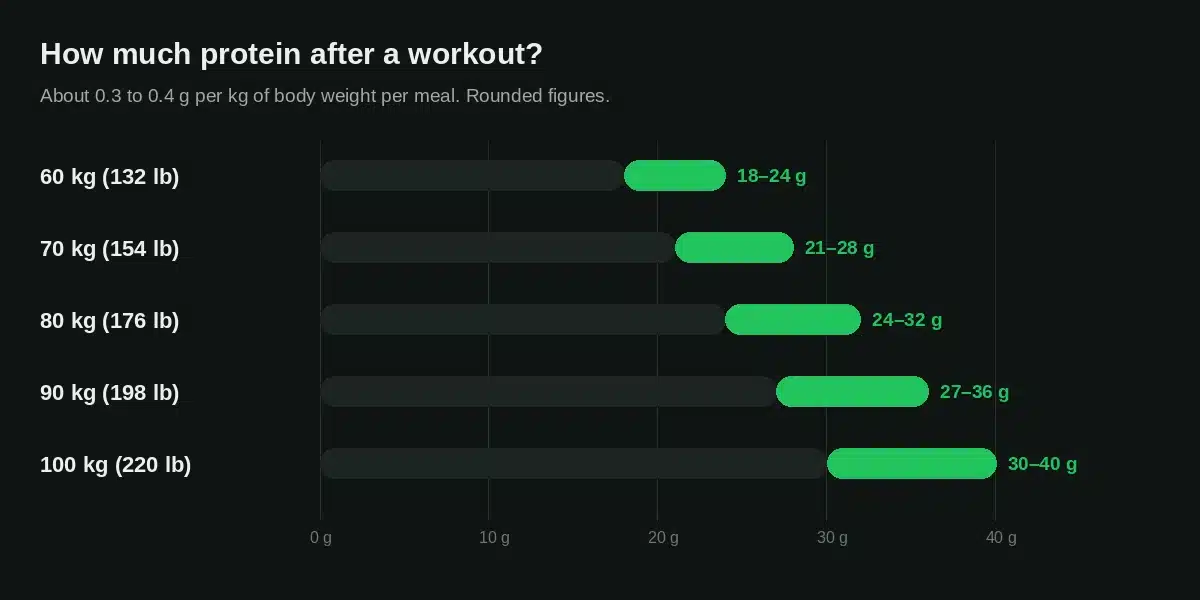
Larger meals are not wasted. A 2023 study by Trommelen and colleagues found that 100 grams of protein after a full-body workout produced a larger and longer-lasting muscle-building response than 25 grams. That challenges the old idea that your body can only use 20 to 30 grams at a time. For most people, though, spreading protein evenly across the day is still the most practical approach.
Quality matters too. Animal proteins like dairy, eggs, meat and fish are rich in leucine, the amino acid that helps switch on muscle protein synthesis. Plant proteins work well too, but you may need slightly larger servings or a combination of sources to get the same effect.
How Many Carbs Should You Eat After a Workout?
How many carbohydrates you need after training depends on how hard and how long you trained, and how soon you train again. For a typical strength session, a normal balanced meal with some carbs is enough to refill your glycogen before your next workout.
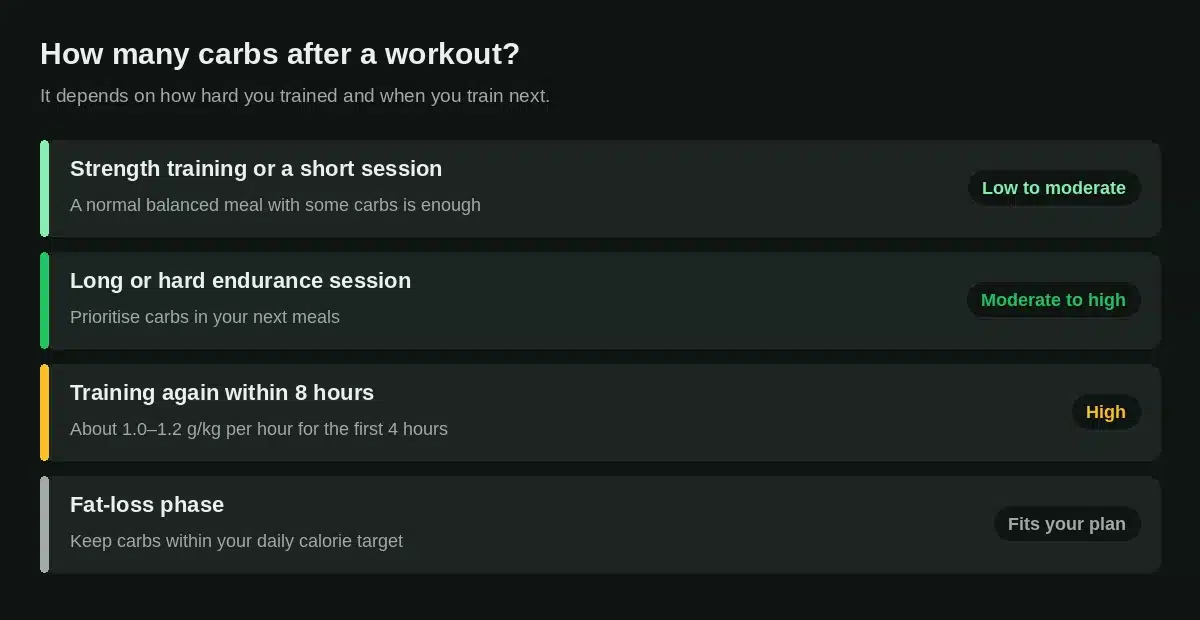
Carbs become more important after long or intense endurance sessions, and especially when you train twice in one day. The joint position statement on nutrition and athletic performance from the American College of Sports Medicine recommends about 1.0 to 1.2 grams of carbohydrate per kilogram of body weight per hour for the first four hours when you have less than eight hours between sessions. For most gym-goers training once a day, that level of precision is not needed.
Combining protein with carbohydrate is a good strategy either way. Carbs help refill glycogen, protein supports muscle repair, and together they make a meal that keeps you full and fuelled.
Don’t Forget Fluids and Electrolytes
Rehydration is the most overlooked part of post-workout nutrition. If you sweat a lot, weigh yourself before and after training. The same ACSM position statement suggests drinking about 1.25 to 1.5 litres of fluid for every kilogram of body weight lost, spread over the hours after training rather than all at once.
Water is enough for most sessions. After long, sweaty workouts, especially in the heat, foods and drinks that contain sodium help you hold on to the fluid you drink. A salty meal, milk or an electrolyte drink all work.
Does Fat Slow Down Recovery?
Fat slows digestion a little, which is why some people avoid it after training. In practice, a moderate amount of fat in your post-workout meal does not stop you from recovering or building muscle. Whole eggs, salmon, avocado, nuts and olive oil are all fine choices. The only reason to keep fat lower is if you train again within a few hours and want the meal to digest quickly.
The Best Post-Workout Foods
The best post-workout foods provide high-quality protein, useful carbohydrates, or both. Here are reliable choices to build your meals around.
Best Protein Sources
- Greek yogurt and skyr: around 15 to 20 grams of protein in a typical pot, plus calcium. Easy to combine with fruit and oats.
- Eggs: about 6 grams of protein per egg, with vitamins in the yolk. Our guide on whether egg whites are healthy compares whole eggs and whites.
- Chicken and turkey breast: around 30 grams of protein per 100 grams cooked, with very little fat.
- Salmon and other fish: high-quality protein plus omega-3 fats.
- Cottage cheese: rich in casein, a slow-digesting protein that works well in the evening.
- Milk: about 8 grams of protein per glass, plus fluid and electrolytes. Chocolate milk adds carbohydrates.
- Tofu, tempeh and lentils: good plant-based options, especially when combined.
- Protein powder: a convenient way to get 20 to 25 grams of protein when you cannot eat a meal.
Best Carbohydrate Sources
- Rice and potatoes: easy to digest and effective for refilling glycogen.
- Oats: a good base for a post-workout bowl with yogurt or milk.
- Fruit: bananas, berries and dried fruit are quick, portable carbs.
- Wholegrain bread and wraps: practical for sandwiches with eggs, chicken or tuna.
- Pasta: a good choice after long endurance sessions.
For a longer list of protein-rich foods, see our guide to high-protein foods.
15 Post-Workout Meal and Snack Ideas
These meals and snacks combine protein and carbohydrates. Protein amounts are approximate and depend on portion sizes.
| Meal or snack | Approx. protein | Best for |
|---|---|---|
| Greek yogurt with berries, oats and honey | 25–30 g | Quick breakfast after morning training |
| Chicken, rice and vegetables | 35–45 g | Classic main meal |
| Three eggs on wholegrain toast with fruit | 20–25 g | Simple meal at home |
| Protein shake with a banana | 25–30 g | On the go |
| Salmon with potatoes and greens | 30–35 g | Dinner after evening training |
| Tuna wrap with salad | 30–35 g | Lunch or packed meal |
| Cottage cheese with pineapple | 20–25 g | Light snack or evening |
| Chocolate milk (500 ml) | 15–18 g | After endurance sessions |
| Turkey and cheese sandwich | 25–30 g | Easy packed lunch |
| Overnight oats with protein powder | 30–35 g | Prepared the night before |
| Lean beef and rice bowl | 35–40 g | Muscle gain |
| Tofu stir-fry with noodles | 20–25 g | Plant-based main meal |
| Lentil and chickpea curry with rice | 20–25 g | Plant-based, high fibre |
| Skyr with granola | 20–25 g | Fast snack |
| Omelette with vegetables and toast | 25–30 g | Weekend brunch |
What to Eat After a Workout Based on Your Goal
For Muscle Gain
Prioritise protein, 0.3 to 0.4 g/kg per meal, and make sure you are eating enough total calories. A generous post-workout meal with protein, carbs and some fat makes it easier to reach a calorie surplus. Read more in our guide on how to build muscle.
For Fat Loss
Keep the protein high, since it helps preserve muscle and keeps you full, and fit the carbs and fat into your daily calorie target. Your post-workout meal is not “free” calories, but it is a smart time to place a good share of your carbs. Our guide on how to lose belly fat covers the bigger picture.
For Endurance Training
After long runs, rides or swims, carbohydrates move up the priority list. Combine them with protein, and pay extra attention to fluids and sodium, especially after sessions in the heat.
After Morning Fasted Training
If you train on an empty stomach, eat a proper meal with protein and carbs soon afterwards. This is the situation where timing matters most, because you have gone many hours without protein.
After Evening Training
Eat a normal dinner with protein and carbs. If you train late and go to bed soon after, a protein-rich snack such as cottage cheese, Greek yogurt or milk works well.
Do You Need a Protein Shake After a Workout?
No, but it is convenient. A shake is simply a fast, portable way to get protein when you cannot eat a meal soon after training. If you eat a protein-rich meal within a couple of hours anyway, a shake adds little. Our guides on how many protein shakes a day and what to mix protein powder with help you use them well.
What to Avoid After a Workout
- Skipping food entirely. Going many hours without eating, especially after fasted training, slows recovery.
- Relying on sports drinks alone. They provide carbs and electrolytes but almost no protein.
- Heavy drinking. Alcohol after training has been shown to reduce muscle protein synthesis, even when protein is eaten alongside it.
- Overcompensating. A hard workout does not justify an enormous treat. Many people eat back far more calories than they burned.
- Ignoring the rest of the day. One perfect post-workout meal cannot make up for too little protein across the day.
Frequently Asked Questions
How soon after a workout should I eat? Within about two hours is sensible for most people. If you ate a protein-rich meal before training, there is no rush. If you trained fasted, eat sooner.
What is the best thing to eat after a workout? A meal with 20 to 40 grams of protein and some carbohydrates. Greek yogurt with fruit, chicken with rice, eggs on toast or a protein shake with a banana are all excellent options.
Is it bad to not eat after a workout? Missing one meal will not ruin your progress, but regularly going many hours without protein after training slows recovery and makes it harder to reach your daily targets.
Should I eat carbs after a workout if I want to lose weight? Yes, if they fit your daily calories. Carbs after training help refill glycogen and support performance in your next session. Just keep the total amount in line with your target.
Is chocolate milk a good post-workout drink? Yes. It combines protein, carbohydrates, fluid and electrolytes, which makes it a practical and inexpensive recovery drink, especially after endurance training.
Can I drink coffee after a workout? Yes. Coffee does not interfere with recovery, and some research suggests caffeine with carbohydrate may speed up glycogen refilling. Just remember it is not a meal.
The Bottom Line
What you eat after a workout should be simple: a meal with 20 to 40 grams of high-quality protein, some carbohydrates to refill your energy stores, and enough fluid to rehydrate. The “anabolic window” is much wider than gym folklore suggests, so eating within a couple of hours is enough for most people.
Focus first on hitting your daily protein and calorie targets, then use your post-workout meal as one of the easiest places to get there. Choose foods you enjoy, adjust the carbs to your training and goals, and recovery will take care of itself.
Sources
- Kerksick CM, Arent S, Schoenfeld BJ et al. International Society of Sports Nutrition position stand: nutrient timing. Journal of the International Society of Sports Nutrition, 2017.
- Aragon AA, Schoenfeld BJ. Nutrient timing revisited: is there a post-exercise anabolic window? Journal of the International Society of Sports Nutrition, 2013.
- Schoenfeld BJ, Aragon AA. How much protein can the body use in a single meal for muscle-building? Implications for daily protein distribution. Journal of the International Society of Sports Nutrition, 2018.
- Thomas DT, Erdman KA, Burke LM. American College of Sports Medicine Joint Position Statement: Nutrition and Athletic Performance. Medicine and Science in Sports and Exercise, 2016.
- Trommelen J, van Lieshout GAA, Nyakayiru J et al. The anabolic response to protein ingestion during recovery from exercise has no upper limit in magnitude and duration in vivo in humans. Cell Reports Medicine, 2023.

I'm Tomek, your dedicated fitness coach at TheGymGoat. With years of experience as a certified personal trainer, fitness blogger and a passion for empowering individuals, I'm committed to helping you reach your health and wellness goals. I don't do excuses, I make priorities and always base my workout and diet on reserach.
All articles by Tomek →