



ON THIS PAGE
Few exercises are as simple, as accessible, or as effective as the plank. There’s no equipment, no fancy movement, and no gym required, just you holding a single position against the pull of gravity. Yet in that quiet, unglamorous hold, a remarkable amount of work is happening across your entire body. The plank has earned its place as a cornerstone of core training for good reason.
Here’s a complete look at the real benefits of the plank, an honest reality check on what it can and can’t do, and how to perform it properly.
This article is informational and not a substitute for individual medical advice.
What Is a Plank?
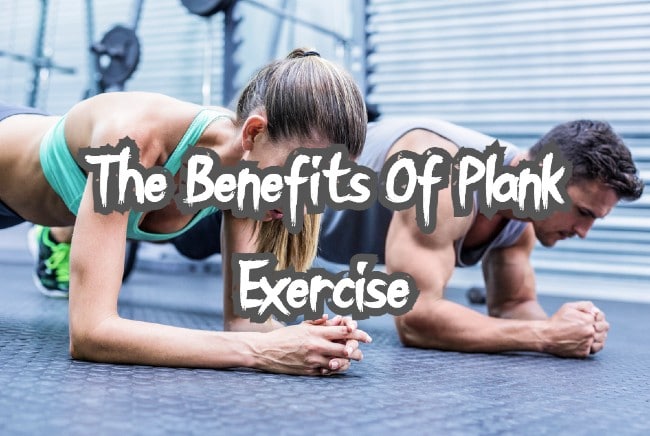
A plank is an isometric core exercise, meaning you hold a static position rather than moving through repetitions. You support your bodyweight on your forearms (or hands) and toes, keeping your body in a straight line from head to heels, and simply hold. That’s it.
What makes the plank so valuable is precisely this static nature. Unlike crunches or sit-ups, which train your abs through dynamic, repeated spinal flexion, the plank trains your core to do its real job: bracing and stabilising your body as one connected unit, resisting movement rather than creating it. That’s how your core actually functions in daily life and in almost every athletic movement, which is what gives the plank its power.
Muscles Worked
Though it looks like an ab exercise, the plank is genuinely full-body:
- Deep core: the transverse abdominis (your deep internal “corset” muscle), rectus abdominis (the six-pack muscle), and obliques all fire to hold you rigid.
- Shoulders, chest, and arms: work to support your upper body.
- Back: your lower back and spinal muscles engage to keep you straight.
- Glutes and legs: your glutes, quads, and hamstrings all contract to maintain the line.
That whole-body engagement is why the plank is such an efficient, effective exercise.
The Key Benefits of the Plank

1. Builds Deep Core Strength and Stability
This is the plank’s headline benefit. By forcing your entire core to brace and hold against gravity, the plank builds deep, functional core strength, particularly in the transverse abdominis, the deep stabilising muscle that acts like a natural corset around your midsection. Crucially, this trains your core the way it’s designed to work in real life: as a stabiliser that protects your spine and transfers force between your upper and lower body. That kind of anti-movement stability is something crunches and sit-ups simply don’t develop as well, and it’s the foundation of genuine core function.
2. Improves Your Posture
If you spend your days hunched over a desk or phone, the plank is a powerful antidote. By strengthening the muscles of your core, back, shoulders, and neck, it makes it easier to hold your body in proper alignment, shoulders back and spine neutral, whether you’re sitting or standing. Over time, a stronger core translates into noticeably better posture, which not only looks more confident but also reduces the strain that poor posture places on your body.
3. Supports a Healthier Lower Back
A strong, stable core is one of your lower back’s best allies. The plank strengthens the muscles that support and stabilise your spine, which can help reduce the likelihood of lower-back discomfort and improve how well your back handles everyday movements like lifting and bending. It’s worth being clear here, though: while a stronger core can genuinely support back health, the plank is not a medical treatment, and anyone dealing with ongoing back pain should consult a healthcare professional rather than relying on exercise alone.
4. A Genuinely Full-Body Workout
Don’t be fooled by its reputation as an “ab exercise.” Holding a plank requires your shoulders, chest, arms, back, glutes, and legs to work alongside your core, all at once. This makes it a remarkably efficient, all-encompassing exercise, you’re strengthening and stabilising much of your body in a single hold. That full-body engagement is a big part of why the plank is such a staple in athletic and bodyweight training.
5. Enhances Balance and Coordination
Because a strong, stable core is central to balance, regular planking quietly improves your balance and coordination. Training your body to stay rigid and controlled carries over into better body control during other activities, from running and lifting to everyday movements. Improved balance is especially valuable as you get older, helping to reduce the risk of trips and falls.
6. Boosts Athletic and Functional Performance
Your core is the link between your upper and lower body, and almost all powerful movement flows through it. By building a strong, stable midsection, the plank improves your ability to generate and transfer force, which enhances performance across virtually every sport and lift. A solid core also makes everyday functional tasks, carrying, lifting, twisting, easier and safer. It’s foundational strength that pays off everywhere.
7. No Equipment, Endlessly Scalable

One of the plank’s greatest practical strengths is its sheer accessibility. You can do it anywhere, at home, in the gym, or during a break at the office, with nothing but the floor and your own bodyweight. And it scales to every level: beginners can start on their knees or hold for short periods, while advanced trainees can progress to countless harder variations. It fits into any routine and grows with you, making it one of the most versatile exercises around, right alongside other bodyweight staples like push-ups.
8. A Spine-Friendly Way to Train Your Core
For people who find crunches and sit-ups uncomfortable on their neck or lower back, the plank is an excellent alternative. Because it involves no repeated spinal flexion, holding a neutral spine instead, it lets you build serious core strength without the repetitive bending that bothers some backs. This makes it a gentler, joint-friendly cornerstone of core training for a wide range of people.
A Reality Check: Planks and Visible Abs
Here’s the honest truth that a lot of content skips. The plank builds a strong, stable core, but it will not, on its own, give you visible six-pack abs. Everyone already has abdominal muscles, whether they show or not comes down to how much body fat sits on top of them. And you cannot spot-reduce fat from your stomach by doing planks, that’s a myth. Visible abs are revealed by lowering your overall body fat through a sensible diet and calorie deficit, as we cover in our bulking vs cutting guide, not by holding planks. Think of the plank as building the muscle underneath, and your nutrition as what makes it visible. The two work together, but you can’t out-plank a poor diet.
One more myth worth busting: longer is not better. Holding a plank for five minutes isn’t the goal, and beyond a couple of minutes you hit diminishing returns. Once you can hold a solid plank for around a minute with good form, you’ll get far more benefit from progressing to harder variations than from simply extending the time.
How to Do a Proper Plank
- Lie face down, then place your forearms on the floor with your elbows directly under your shoulders.
- Rise up onto your forearms and toes, lifting your body off the ground.
- Keep your body in a straight line from your head to your heels.
- Engage your core by drawing your belly button toward your spine, and squeeze your glutes.
- Keep your neck neutral, gaze at the floor just ahead of you, and breathe normally throughout.
- Hold for your target time, then rest.
A proper plank should feel challenging but controlled, never painful.
Common Mistakes to Avoid
- Sagging hips. Letting your hips drop puts strain on your lower back. Keep your body in a straight line and glutes engaged.
- Raising your hips too high. Piking your bottom upward takes the work off your core. Stay level.
- Dropping or craning your head. Keep your neck in line with your spine, looking down and slightly forward.
- Holding your breath. Breathe steadily throughout rather than tensing up and holding it.
- Not actively bracing. Consciously tighten your core and glutes, a plank isn’t just hanging there, it’s active tension.
Plank Variations
Once the standard plank feels manageable, progress with these:
- High plank: held in the top of a push-up position on your hands.
- Side plank: on one forearm with your body sideways, excellent for the obliques and correcting side-to-side imbalances.
- Plank with movement: adding shoulder taps, leg lifts, or reaching to increase the challenge.
These keep your core progressing far more effectively than simply holding longer.
Frequently Asked Questions
What muscles do planks work? Planks are a full-body exercise centred on the core, working the deep transverse abdominis, rectus abdominis, and obliques, along with your shoulders, chest, arms, back, glutes, and legs to keep your body stable and straight.
Will planks give me a six-pack? Planks build strong core muscles, but visible abs depend on having low enough body fat for them to show, which comes from your diet. You can’t spot-reduce belly fat with planks, so pair them with sensible nutrition to reveal the muscle underneath.
How long should I hold a plank? Quality matters more than duration. Beginners can start with 15 to 30 seconds, building toward around a minute with good form. Beyond a couple of minutes there’s little extra benefit, so progress to harder variations instead of just holding longer.
Are planks better than sit-ups? They serve different purposes. Planks build core stability by resisting movement and are gentler on the spine, while sit-ups train dynamic flexion. Planks are often preferred for functional core strength and for those who find sit-ups uncomfortable, but both can have a place.
Can I do planks every day? Yes, planks are gentle enough to do daily for most people. Just focus on good form, and progress through harder variations over time rather than only increasing the hold duration.
The Bottom Line
The plank is proof that the simplest exercises are often the most effective. In one equipment-free hold, it builds deep core strength and stability, improves your posture, supports your lower back, and engages your entire body, all while being endlessly scalable and gentle on the spine. It deserves its status as a core-training cornerstone.
Just keep your expectations grounded: planks build the muscle, but your diet reveals it, and better form and harder variations beat marathon holds every time. Nail your technique, progress sensibly, and the humble plank will reward you with a stronger, more stable, more capable body.

Reda El Is a CSCS trainer, Registered Dietitian, ACE-certified nutritionist, With more than 12 years of experience, also he's a Brazilian Jiu-Jitsu competitor, he has done many articles and information sources on many authority sites, such as lifehack.org, Healthline, eat this, wealthygorilla.com, and more. He always keeps improving and updating his knowledge to help everyone to achieve their goals.
All articles by Reda Elmardi →