




ON THIS PAGE
It seems like a simple question: how much does the bar weigh on a Smith machine? But unlike the standard Olympic barbell, which weighs a reliable 45 pounds (20 kg) in almost every gym, the Smith machine bar has no universal weight. The answer genuinely varies from one machine to the next, and knowing your machine’s real number matters more than most people realize.
Here’s a complete, honest guide to Smith machine bar weight, why it varies so much, and exactly how to find out what yours weighs.
This article is informational and not a substitute for individual training advice.
The Short Answer:
A Smith machine bar typically has an effective weight somewhere between 6 and 45 pounds (roughly 3 to 20 kg), with most machines you’ll encounter landing in the 15 to 25 pound (7 to 11 kg) range. There is no standard, so the only way to know your exact number is to check or test your specific machine.
That’s a huge range, and it’s not a cop-out answer, it’s genuinely that variable. To understand why, you need to know how a Smith machine works.
Why There’s No Standard Weight
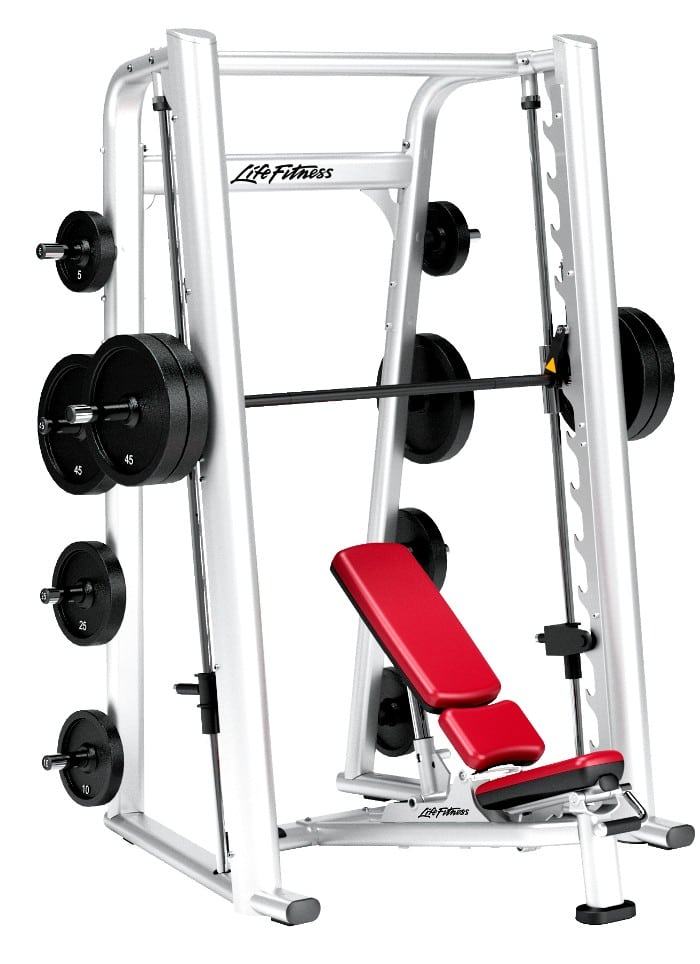
A Smith machine is a barbell fixed inside steel rails, so the bar moves along a guided path rather than freely. Several factors mean that guided bar can weigh almost anything:
- The bar itself. Because the rails support and guide the bar, it doesn’t need to be as heavy-duty as a free-standing Olympic barbell, so manufacturers use bars of varying weights, often lighter than 45 pounds.
- The brand and model. Every manufacturer designs their machine differently, with no industry standard to follow.
- The rail angle. Contrary to popular belief, many Smith machine rails are set at a slight angle rather than perfectly vertical, to better mimic natural movement paths. This can subtly affect how the bar feels.
But the single biggest factor, and the one that catches people out, is counterbalancing.
The Big Factor: Counterbalancing
Many Smith machines, especially in commercial gyms, use a counterbalance system: a pulley and counterweight mechanism built into the frame that pulls the bar upward, offsetting much of its actual weight. The result is that the “felt” or effective starting weight, what you actually have to lift, is far lighter than the bar’s true mass.
Here’s a simple way to picture it: a Smith machine with a 20 kg bar and no counterbalancing gives you 20 kg of starting resistance. But that same bar with a 4 kg counterbalance on each side gives you only about 12 kg of felt resistance. On heavily counterbalanced commercial machines, the effective weight can drop to as little as 6 to 15 pounds.
Non-counterbalanced machines, by contrast, give you the bar’s full weight, which tends to be higher, often 15 to 35 pounds, and occasionally the full 45. This is why you can’t simply assume a number: you need to know both the bar’s weight and whether it’s counterbalanced.
Common Weight Ranges by Machine Type
While every machine differs, here are the typical ranges:
- Commercial gym machines (often counterbalanced): roughly 6 to 25 pounds of effective weight. The Smith machines at chains like Planet Fitness or LA Fitness usually fall here, and often feel surprisingly light.
- Home gym machines (often non-counterbalanced): roughly 15 to 35 pounds, sometimes more, as they’re less likely to have counterbalance systems.
As a rough benchmark, if you have no other information, many standard gym Smith bars sit around 15 to 20 pounds of felt resistance, but treat that as a guess until you confirm it.
How to Find Your Smith Machine’s Real Bar Weight
Since guessing isn’t good enough for serious training, here are three reliable ways to find out:
1. Check the Manufacturer’s Specifications
The fastest method. Look for the machine’s make and model, then check the manufacturer’s website, product page, or manual. Look specifically for “bar weight” or “starting resistance,” as some brands list both separately (the starting resistance already accounts for counterbalancing, making it the more useful figure).
2. Ask Gym Staff
If you’re at a commercial gym and can’t find the model details, simply ask a trainer or staff member. They can often tell you, or help you locate the information.
3. Use a Luggage Scale (the Best Real-World Method)
This is arguably the most useful approach, because it measures the actual starting resistance, counterbalancing included. Hook a handheld luggage scale onto the unloaded bar, lift until the bar just clears its safety hooks, and read the number. Do it two or three times and average the results, as the first reading sometimes runs a little high. The figure you get is exactly what you’re lifting before adding any plates.
Why the Bar Weight Actually Matters
This isn’t just trivia, knowing your Smith bar weight matters for real reasons:
- Accurate progress tracking. If you think you’re lifting a 45-pound bar but it’s actually 15, every number in your training log is wrong, and you can’t measure progress or apply progressive overload accurately.
- Honest strength assessment. Overestimating your load makes you think you’re stronger than you are; underestimating means you’re not pushing hard enough.
- Comparing across gyms. Switch to a gym with a heavier bar and the same “weight” suddenly feels harder, which can be confusing and demoralising if you don’t know why.
Since progressive overload, gradually increasing the load over time, is the key driver of strength and muscle growth, starting from an accurate number is essential.
Smith Machine vs Free Barbell: An Important Note
One final point worth understanding: because the Smith machine guides the bar along a fixed path, it removes much of the balance and stabiliser demand of a free barbell. This means you can typically lift more on a Smith machine than you can with free weights, so you should never directly compare your Smith machine numbers to your free-barbell lifts, they’re simply not equivalent. The Smith machine is a useful tool for controlled pressing, squatting, rows, and even calf raises, as noted in our guide on seated calf raise alternatives, but it’s a different beast from a free barbell. For more on machines versus free weights, see our guide on calisthenics vs weights.
Frequently Asked Questions
How much does a Smith machine bar weigh? It varies from around 6 to 45 pounds (3 to 20 kg), with most machines landing in the 15 to 25 pound range. There’s no universal standard, as the weight depends on the bar itself and whether the machine is counterbalanced.
Why is the Smith machine bar lighter than a normal barbell? Two reasons. The bar often doesn’t need to be as heavy-duty as a free-standing Olympic barbell because the rails support it, and many machines use a counterbalance system that offsets the bar’s weight, making the effective load much lighter.
Is the Smith machine bar always 45 pounds? No. Unlike the standard Olympic barbell, which is 45 pounds (20 kg), the Smith machine bar has no standard weight and is usually lighter, often between 15 and 25 pounds of effective resistance, sometimes even less.
How do I find out my Smith machine’s bar weight? Check the manufacturer’s specifications or manual, ask gym staff, or measure it yourself by hooking a luggage scale onto the unloaded bar and lifting until it clears the safety hooks. The luggage scale method gives you the true starting resistance.
Can I compare my Smith machine lifts to free-weight lifts? Not directly. The Smith machine guides the bar and removes balance demands, so you can usually lift more on it than with free weights. Treat them as separate exercises rather than comparing the numbers.
The Bottom Line
There’s no single answer to how much a Smith machine bar weighs, it ranges from about 6 to 45 pounds depending on the machine, with counterbalancing being the biggest factor. Most fall in the 15 to 25 pound range, but the only way to know for certain is to check the manufacturer’s specs or measure it yourself with a luggage scale.
Taking a few minutes to find your machine’s real bar weight is well worth it. It lets you track your training accurately, apply progressive overload properly, and understand your true strength, rather than building your progress on a number that could be completely wrong.

Reda El Is a CSCS trainer, Registered Dietitian, ACE-certified nutritionist, With more than 12 years of experience, also he's a Brazilian Jiu-Jitsu competitor, he has done many articles and information sources on many authority sites, such as lifehack.org, Healthline, eat this, wealthygorilla.com, and more. He always keeps improving and updating his knowledge to help everyone to achieve their goals.
All articles by Reda Elmardi →