





ON THIS PAGE
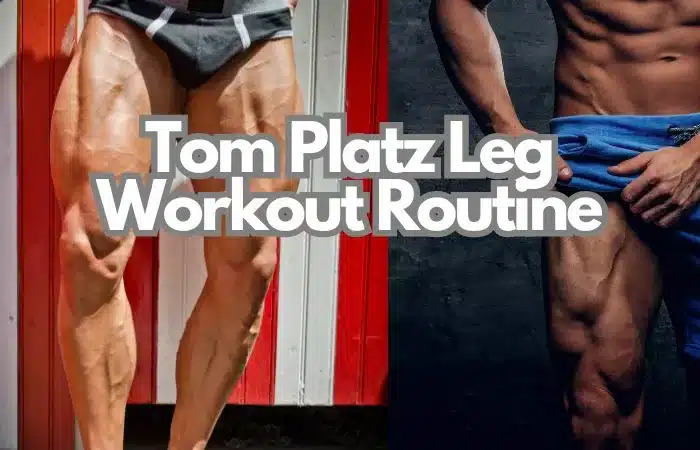
There is a very short list of bodybuilders whose physique changed how people think about training an entire muscle group. When it comes to legs, Tom Platz owns that conversation, and it is not close.
Known as both The Golden Eagle and, fittingly, The Quadfather, Platz never won a Mr. Olympia title. In a sport that often treats that crown as the only measure of greatness, that’s usually the first thing mentioned about him. It’s rarely the last, though, because the second thing people always mention is the legs. His quad development was so extreme, so detailed, and so far ahead of its time that it’s still referenced in serious training discussions decades later. To this day, his legs remain the benchmark.
Today we’re going inside the routine that built them: what Platz actually did in the gym, why it worked, and what serious lifters can still take from it.
Who Is Tom Platz?
Tom Platz emerged from the golden era of bodybuilding in the late 1970s and 1980s, training alongside the legends of Gold’s Gym in Venice, California. Born in 1955, he competed at the highest level, with his best Mr. Olympia finish coming in 1981. But it was never placings that defined him. It was a single body part developed to a degree the sport had never seen, built on a training philosophy of relentless, almost uncomfortable intensity.
The Tom Platz Leg Workout
Here’s the structure of his classic leg session. Note the sheer volume, particularly on squats, and the high rep ranges throughout.
| Exercise | Sets | Reps |
|---|---|---|
| Squats | 8-12 | 5-20 |
| Hack Squats | 5 | 10-15 |
| Leg Extensions | 5-8 | 10-15 |
| Lying Hamstring Curls | 6-10 | 10-15 |
| Standing Calf Raise | 3-4 | 10-15 |
| Seated Calf Raise | 3-4 | 10-15 |
The exercises themselves are simple, mostly compound movements that any lifter recognizes from a normal leg day. What sets this apart is the volume and intensity. Almost nobody pairs 10 sets of high-rep hamstring curls with a dozen sets of high-rep heavy squats in a single session. That combination is what made it brutal and what made it work.
“The Harder, The Better”
The numbers attached to Platz’s squatting have become the stuff of legend, recounted endlessly in gyms and training forums. By the most widely repeated accounts, despite competing at well under 230 pounds, he squatted in the region of 635 pounds for multiple reps, repped 350 pounds for an astonishing number of repetitions, and on occasion loaded 225 pounds and squatted continuously for over ten minutes, north of 100 reps without racking the bar.
Whether every figure is precise to the pound matters less than what they collectively represent. Even allowing for the embellishment that surrounds all gym legends, Platz clearly had a relationship with the squat rack that most lifters cannot comprehend. His depth was uncompromising, his technique distinctive, and his capacity for sustained effort under load remains a reference point in the sport.
So you’d assume he loved squatting. He didn’t.
At a seminar in 2018, Platz surprised the room by admitting he didn’t particularly enjoy squats. Not during the set, not while grinding through rep after brutal rep. What he loved was the aftermath: the feeling of having pushed himself past the point most people quit, and the evidence that effort provided about who he was. He wasn’t fuelled by enjoyment. He was fuelled by what the suffering proved.
It’s one of the most honest things ever said about elite training, and it reframes a lot of what people assume about motivation and discipline.
How Often Did Platz Train Legs?
This part tends to surprise people. In interviews discussing the old debate of overtraining versus undertraining, Platz indicated that at his peak he trained legs far less frequently than you’d expect, prioritising complete recovery between sessions rather than hitting them once or twice a week like most bodybuilders.
His logic was straightforward: if you genuinely train at the intensity required to force growth, you need the recovery time to match. Half-effort sessions done frequently won’t outperform maximum-effort sessions done less often. The stimulus has to be worth recovering from. The leg day was an event, not a routine, and he treated it accordingly.
It’s a philosophy that cuts against the usual emphasis on frequency, and coming from the man with arguably the best legs in history, it’s hard to dismiss out of hand. It also lines up with a key principle of programming: what matters is accumulating enough quality, hard volume and then recovering from it, a topic we cover in depth in our guide on how many sets per muscle group you actually need.
What Makes the Routine Worth Studying
The routine has held up for decades for reasons that go beyond the raw numbers.
It’s built on a foundation of high-rep squatting that develops strength, size, and muscular endurance at the same time, rather than chasing one at the expense of the others. Compound movements come first, when energy and the nervous system are freshest, before the session moves into isolation work like leg extensions and curls that reach areas the big lifts can’t fully target on their own. Every major muscle in the lower body gets addressed.
Varying the rep ranges within a single session, particularly that 5-to-20 spread on squats, means training several physiological qualities at once instead of locking into one range and hoping it covers everything. It’s a complete system, not just a list of exercises. For more on the foundational lift at its heart, see our breakdown of the benefits of squats.
Should You Try the Tom Platz Leg Workout?
Honestly, this routine is not for beginners. The volume and intensity are extreme, and attempting it without a solid training base and excellent squat technique would be a fast track to injury or being unable to walk for a week.
If you’re an experienced intermediate or advanced lifter with good form, it can be a genuine challenge to test yourself against, though most people would be wise to scale it down first. A sensible way to dip into the Platz approach without diving into the full version:
- Reduce the squat volume to start, perhaps 4 to 6 working sets rather than 10 to 12, and build up over time.
- Master your squat depth and technique before adding the kind of intensity Platz used. If your form breaks down, the set is over.
- Respect the recovery. A session this demanding needs proper rest afterward, exactly as Platz argued.
- Keep the structure: compounds first, isolation after, varied rep ranges throughout.
If full squatting volume isn’t right for you, our guide to squat alternatives offers effective options, and movements like the leg press and lunges round out a complete leg day.
Why is Tom Platz called the Quadfather?
Because of his almost unbelievable quad development, widely considered the best in bodybuilding history. He’s also known as The Golden Eagle.
Did Tom Platz ever win Mr. Olympia?
No. His best finish came in 1981. His fame rests on his legendary legs and training philosophy rather than competition titles.
How heavy did Tom Platz squat?
By the most widely cited accounts he squatted around 635 pounds for reps and performed extraordinary high-rep sets, though as with most gym legends the exact figures vary in the retelling. What’s undisputed is that his squatting capacity was exceptional.
Summary
Tom Platz stood out even within a golden era stacked with legends, and decades after his peak, his legs remain the standard every serious lower-body physique is measured against. Few have come close.His legacy isn’t only about what he built, but how he thought about training: the brutal honesty about what hard work actually feels like, the willingness to prioritize recovery over frequency, and his ongoing commitment to passing that knowledge on. The leg routine he developed isn’t a relic. It’s a masterclass in intensity, structure, and purpose that holds up today. Just approach it with the respect, and the technique, it demands.

I'm Tomek, your dedicated fitness coach at TheGymGoat. With years of experience as a certified personal trainer, fitness blogger and a passion for empowering individuals, I'm committed to helping you reach your health and wellness goals. I don't do excuses, I make priorities and always base my workout and diet on reserach.
All articles by Tomek →


