




ON THIS PAGE
Tucked away in the corner of the gym, often overlooked in favour of the treadmill, sits one of the most effective cardio machines you can use: the stair climber. Anyone who has spent ten minutes on one knows the truth, it’s tough, it’s sweaty, and it delivers. It combines a serious cardiovascular workout with genuine lower-body strengthening, all while being surprisingly kind to your joints.
Here’s a complete look at the real benefits of the stair climber, its honest limitations, and how to use it to get the most out of every climb.
This article is informational and not a substitute for individual medical advice.
What Is a Stair Climber?
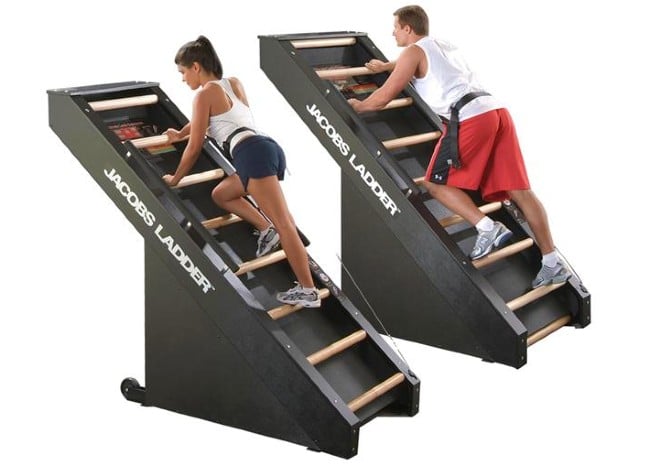
A stair climber, also known as a StairMaster, stepmill, or stair machine, is a cardio machine that simulates the act of climbing an endless flight of stairs. Think of it as a mini escalator with revolving steps: as the stairs rotate downward, you step up continuously, climbing without ever getting anywhere. You can adjust the speed and resistance to control the intensity, and handrails are there to help you keep your balance.
In essence, it’s the treadmill of stairs, and because you’re lifting your own bodyweight up against gravity with every step, it’s a genuinely demanding piece of kit.
Muscles Worked
The stair climber is a lower-body powerhouse. Every step is a bit like a mini-squat, driving through some of the biggest muscles in your body:
- Glutes: heavily involved in driving each step up, which is why the machine is so popular for building the backside.
- Quadriceps and hamstrings: power the stepping motion.
- Calves: work with every push through the foot.
- Core: your abs and lower back engage constantly to keep you upright and stable.
That combination of large muscle groups working together is exactly why the stair climber burns so many calories and builds real lower-body strength.
11. A Powerful Lower-Body and Glute Workout
The stair climber’s standout feature is how effectively it works your lower body, and your glutes in particular. Because each step drives your bodyweight upward, it heavily recruits your glutes, quads, hamstrings, and calves, effectively turning your cardio session into a lower-body strengthening workout at the same time.
This dual benefit is rare among cardio machines and is a big reason the stair climber has become so popular with people wanting to build and tone their legs and glutes. Just keep expectations realistic: it builds excellent muscular endurance and tone, but for maximum glute size and strength you’ll still want dedicated resistance training like hip thrusts alongside it, as we explain in our guide on how to get a bigger butt.
2. Excellent Cardiovascular Fitness
Make no mistake, the stair climber is a serious cardio workout. Continuously driving those big leg muscles demands a lot of your heart and lungs, raising your heart rate quickly and challenging your cardiovascular system hard.
Over time, this improves your cardiorespiratory fitness and VO2 max, the measure of how efficiently your body uses oxygen, with research showing meaningful improvements in cardio capacity in as little as six to eight weeks of regular stair climbing. A higher VO2 max means more stamina, more energy for daily life, and it’s strongly linked to better heart health and longevity. Like all cardio, it’s superb for your long-term health.
3. Weight-Bearing Yet Low-Impact
This is the stair climber’s clever trick, and what sets it apart. On one hand, it’s a weight-bearing exercise, you support your own bodyweight against gravity with each step, which stimulates your bones to stay strong and dense and helps protect against osteoporosis, a benefit that non-weight-bearing machines like the bike and elliptical can’t offer.
On the other hand, because each step is controlled and smooth, there’s none of the jarring impact you get from running. That makes it far gentler on your joints than pounding the treadmill or pavement. In short, you get the bone-strengthening benefits of weight-bearing exercise without the joint-punishing impact of running, a genuinely valuable combination, especially for older adults and anyone mindful of their knees.

4. Burns Calories Efficiently
Climbing your bodyweight upward over and over is hard work, and hard work burns calories. The stair climber is one of the more time-efficient calorie-burners in the gym, letting you torch a significant number of calories in a relatively short session. Combined with a sensible diet, that makes it an effective tool for fat loss and weight management. One honest caveat applies here as with all cardio machines: the calorie readout on the display tends to overestimate your actual burn, so treat it as a rough guide. Real, lasting weight loss still comes down to overall energy balance, as we cover in our bulking vs cutting guide.
5. Builds Muscular Endurance
Beyond raw fitness, the stair climber builds real muscular endurance in your legs, training them to keep working without fatiguing as quickly. This has genuine carryover into everyday life and other activities, climbing actual stairs, hiking up hills, or powering through physically demanding tasks all become easier. Fatigue-resistant leg muscles also help stabilise your joints and keep you moving well, which is valuable at any age.
6. Improves Balance, Core Stability, and Posture
Staying upright and balanced while continuously stepping engages your core and trains your stability more than you might expect. Your abs and lower back work throughout to keep you aligned, which strengthens your core, improves your posture, and sharpens your balance and coordination. Better balance is a particularly important benefit as we age, since it helps protect against trips and falls, and research has shown stair-climbing programmes can improve balance in older adults.
7. Functional, Real-World Strength
Unlike some machines that train movements you’d never do in real life, stair climbing is a genuinely functional activity. Building strength and endurance in the exact muscles and movement pattern used to climb stairs directly improves your ability to handle real staircases, hills, and daily life with ease. It’s practical fitness that translates straight into the everyday world.
8. A Mood and Energy Boost
Like all vigorous exercise, a good stair climber session releases mood-lifting endorphins, leaving you feeling accomplished and energised. In fact, research has suggested that a short bout of stair climbing can be more energising than a hit of caffeine, making it a great way to shake off sluggishness while doing your body a world of good.
The Honest Limitations
To use the stair climber well, it helps to know its downsides:
- Leaning on the handrails ruins the workout. This is the single most common mistake. Gripping and leaning on the rails lets them support your weight, taking the load off your legs and drastically reducing the benefit. Use the rails only lightly for balance, and let your legs do the work.
- The calorie display overestimates. As with all cardio machines, don’t take the calorie count literally.
- It’s intense. The stair climber is genuinely challenging, which can be daunting for beginners. Start with a low speed and short duration and build up gradually.
- It can bother sensitive knees. The repeated stepping under load doesn’t suit everyone’s knees, so ease in and stop if you feel pain.
- It’s repetitive. Climbing endlessly can get monotonous, so intervals or entertainment help keep it engaging.
Stair Climber vs Treadmill
Both are excellent, and they serve slightly different purposes. The treadmill offers running and walking with more speed variety, but running carries higher impact. The stair climber places a much greater emphasis on your glutes and lower-body strength and stays lower-impact than running while remaining weight-bearing, making it a superb choice for building the legs and glutes while protecting the joints. Many people use both, choosing the stair climber when they want to hit their lower body harder with less pounding.
How to Get the Most From the Stair Climber
- Don’t lean on the handrails. Stand tall and use them only for light balance, letting your legs carry your weight.
- Keep good posture. Stay upright, engage your core, look ahead rather than down, and take full, controlled steps.
- Start gradually. Begin at a manageable pace and build up speed, resistance, and duration over time.
- Try intervals. Alternating faster and slower climbing periods boosts fitness and burns more calories.
- Drive through your whole foot. Push through your heels and midfoot to properly engage your glutes.
Frequently Asked Questions
Is the stair climber good for weight loss? Yes. It burns calories efficiently by working your largest muscle groups against gravity, and combined with a calorie-controlled diet, it’s an effective, time-efficient fat-loss tool. Just don’t rely on the machine’s calorie display, which overestimates.
Does the stair climber build glutes? It’s excellent for working and toning the glutes, since each step heavily recruits them. For maximum glute growth and strength, though, pair it with dedicated resistance training like hip thrusts and squats.
Is the stair climber bad for your knees? For most people it’s fine and lower-impact than running, but the repeated stepping under load can bother sensitive knees. Ease in gradually, maintain good form, and stop if you feel pain. It’s still gentler on the joints than high-impact cardio.
Is the stair climber better than the treadmill? Neither is simply better. The stair climber targets the glutes and lower body more and stays lower-impact while remaining weight-bearing, while the treadmill offers running variety. The best choice depends on your goals, and many people use both.
How long should I use the stair climber? Beginners might start with 10 to 15 minutes and build up. Because it’s intense, even a relatively short session delivers a strong cardio and lower-body workout. Adjust duration and intensity to your fitness level.
The Bottom Line
The stair climber is one of the gym’s most underrated machines. It delivers a demanding cardiovascular workout, builds real strength and endurance in your legs and glutes, and burns calories efficiently, all while being weight-bearing for your bones yet far gentler on your joints than running. That’s a rare and valuable combination.
The golden rule is simple: don’t lean on the handrails. Stand tall, let your legs do the work, start at a sensible pace, and build up over time. Do that, and the stair climber will reward you with stronger legs, a fitter heart, and a serious sweat, one endless step at a time.