




ON THIS PAGE
Some of the most effective exercises are also the simplest. The wall sit is a perfect example. There’s no equipment, no complicated technique, and no gym required, yet anyone who has held one for more than 30 seconds knows just how challenging it gets.
The wall sit is an isometric exercise, meaning you hold a single position rather than moving through reps. It builds lower-body endurance and strength, challenges your core, and tests your mental grit, all while being gentle on the joints. Here’s an honest look at what it does well, what it doesn’t, and how to do it properly.
This article is informational and not a substitute for individual medical or training advice.
What Is a Wall Sit?
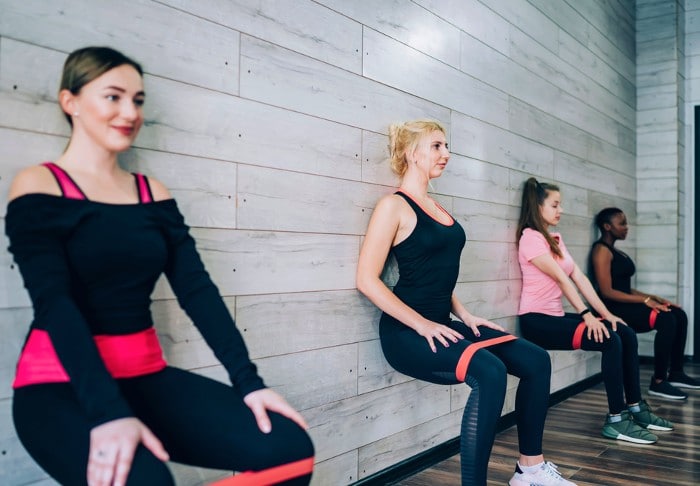
A wall sit involves standing with your back against a wall and sliding down until your thighs are parallel to the floor, as though sitting in an invisible chair, then holding that position. Like the plank, it’s measured in time rather than reps, and most people can manage somewhere around 30 to 60 seconds before their legs start screaming.
It’s primarily a quad exercise. Your quadriceps do the bulk of the work holding you in place, while your glutes, hamstrings, calves, and core assist as stabilisers. Simple to set up, surprisingly brutal to hold.
The Main Benefits of Wall Sits
1. Builds Lower-Body Strength and Endurance
The wall sit shines as a muscular endurance and strength builder for the legs. Holding your bodyweight in a static squat position forces your quads to work continuously under tension, which develops the kind of staying power that carries into sport and daily life. It’s worth setting expectations honestly: as an isometric hold at a fixed angle, the wall sit is excellent for endurance and joint-friendly strength, but it won’t build significant muscle size the way loaded squats do. Think of it as a conditioning and accessory tool rather than a mass builder.
2. A Great Accessory for Your Big Lifts
Because it strengthens the quads and builds endurance, the wall sit works well as accessory work for lower-body lifts. It can support your squat, leg press, and leg extension by building quad endurance and reinforcing the position, making it a useful addition to a leg routine rather than a replacement for heavy work.
3. Strengthens the Core
Holding the wall sit position requires your core to stay engaged and braced to keep you stable and upright. While it’s primarily a leg exercise, your midsection works throughout as a stabiliser, so wall sits contribute to core strength as a useful side effect.
4. Joint-Friendly
This is one of the wall sit’s underrated strengths. Because there’s no movement and no external load bouncing through your joints, it’s gentler on the knees than many dynamic leg exercises, provided your form is correct. That makes it a useful option for people building leg strength while managing certain joint sensitivities, though anyone with knee issues should ease in carefully.
5. No Gym, No Equipment, Anywhere
All you need is a sturdy wall. No membership, no kit, no travel. You can do wall sits at home, in a hotel room, at the office, or outdoors against any solid surface. For convenience and accessibility, few exercises compete, which makes them easy to stay consistent with. They sit naturally alongside other bodyweight movements in a no-equipment routine.
6. Easy to Learn
There’s almost no learning curve. If you can lower into a seated position against a wall, you can do a wall sit. That makes it genuinely accessible to beginners, even if holding it stays difficult no matter how experienced you are.
7. Highly Scalable
Despite its simplicity, the wall sit scales in both directions. Too hard? Hold a shallower angle or shorter intervals. Too easy? Extend your hold time, progress to a single-leg wall sit, or add load (more on that below). That adjustability means it grows with you rather than being outgrown.
8. Can Be Loaded With Weights
To make wall sits more challenging, you can add resistance. Rest a dumbbell or plate on your thighs, hold weights, or wear a weighted vest. Some people also perform dumbbell shoulder presses or curls while holding the position to combine lower-body endurance with upper-body work. These variations keep the exercise demanding as you get stronger.
9. Improves Balance and Stability
Holding a stable, controlled position trains your balance and body awareness, especially in single-leg variations. Better balance pays off in everyday movement and athletic performance, making this a quietly valuable benefit.
10. Time Efficient
A few rounds of wall sits deliver a serious lower-body burn in just a few minutes. For anyone short on time, a handful of 30 to 60 second holds with short rests between them is a quick, effective way to train the legs when a full session isn’t an option.
11. Builds Mental Toughness and Supports Wellbeing
Wall sits become a battle of mind over matter. As the burn sets in, holding the position is as much mental as physical, and pushing through builds genuine discipline. Like all exercise, wall sits also support mental wellbeing by releasing endorphins, which helps with mood and stress. As ever, exercise complements rather than replaces professional support where that’s needed.
How to Do a Wall Sit Correctly
Good form makes the exercise both safer and more effective:
- Stand with your back to a wall, about two feet away. Adjust the distance for your height and leg length.
- With your feet shoulder-width apart, lean back and press your back flat against the wall.
- Slowly slide down until your thighs are parallel to the floor and your knees are bent at roughly 90 degrees.
- Make sure your knees stay above your ankles, not pushed out past your toes.
- Keep your back, shoulders, and head against the wall, brace your core, and hold for 20 to 60 seconds.
- Rest for around 30 seconds, then repeat for 3 to 5 rounds.
As it gets easier, extend your hold time or progress to harder variations like weighted, single-leg, or stability-ball wall sits.
FAQ’s About Wall Sit:
How To Make Wall Sits Easier?
Don’t slide all the way down to a 90-degree angle. Holding a shallower, higher position significantly reduces the difficulty. You can also shorten your hold time, take longer rests, and build up gradually as your endurance improves.
What Muscle Do Wall Sits Work?
Primarily the quadriceps, which hold you in position, with the glutes, hamstrings, calves, and core working as stabilisers. It’s a quad-dominant lower-body exercise with a real core component.
Are Wall Sits Better than Squats?
They serve different purposes. Squats are a dynamic, full-range movement that’s better for building strength and muscle size, while wall sits are an isometric hold that excels at building endurance and is easier on the joints. They complement each other; the wall sit is a great accessory, not a squat replacement. If you’re after squat alternatives in general, there are several worth exploring.
How Many Calories Do Wall Sits Burn?
Relatively few. Wall sits are an endurance and strength exercise rather than a calorie burner, so don’t rely on them for weight loss. Fat loss comes down to your overall diet and activity levels, with wall sits playing a small supporting role.
What If My Lower Back Hurts While Doing Wall Sits?
Stop and check your form first. Your lower back should stay flat against the wall rather than arching away from it; an arched back is the most common cause of discomfort. If pain persists once your form is correct, ease off and consider speaking with a qualified professional.
Do wall sits help build abs?
They engage your core as a stabilizer and contribute to core strength, but they aren’t primarily an ab exercise. Visible abs depend far more on being lean than on any single movement, so pair core work with sensible nutrition if defined abs are your goal.
The Bottom Line
The wall sit proves you don’t need equipment or complexity to get a tough, effective workout. It builds lower-body endurance and strength, challenges your core, goes easy on the joints, and can be done virtually anywhere. Just keep its role in perspective: it’s an excellent endurance and accessory exercise rather than a primary muscle or fat-loss builder.
Use it to complement your squats and other leg work, to train when you’re short on time or away from a gym, or to build the mental grit that comes from holding on when your legs are begging you to stop. Simple, demanding, and genuinely useful. Give it a try and see how long you last.

I'm Tomek, your dedicated fitness coach at TheGymGoat. With years of experience as a certified personal trainer, fitness blogger and a passion for empowering individuals, I'm committed to helping you reach your health and wellness goals. I don't do excuses, I make priorities and always base my workout and diet on reserach.
All articles by Tomek →