


ON THIS PAGE
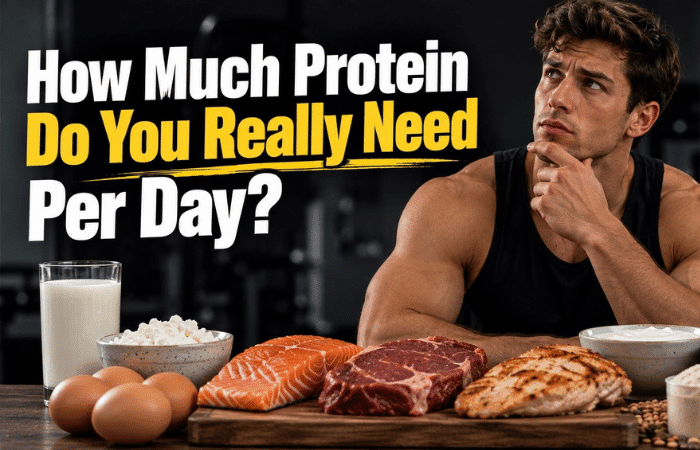
Most active people need around 1.6 to 2.2 grams of protein per kilogram of body weight per day to build muscle, while the general minimum for health is about 0.8 grams per kilogram. The exact amount that’s right for you depends on your goal, your activity level, and your age, and getting it right is one of the most important factors in building muscle, losing fat, and staying healthy.
This guide breaks down exactly how much protein you need for your goal, how to spread it across the day, and whether it’s possible to eat too much.
This article is informational and not a substitute for individual medical or dietary advice. Anyone with kidney disease or other medical conditions should consult a doctor before significantly increasing their protein intake.
Why Protein Is So Important
Protein is the nutrient your body uses to build and repair muscle, produce enzymes and hormones, and support countless other functions, and it’s also the most filling of the three macronutrients. For anyone who trains, it provides the raw materials (amino acids) needed to recover from workouts and build new muscle tissue.
Getting enough protein makes building muscle possible, makes losing fat easier by controlling hunger and preserving lean tissue, and supports healthy ageing. It’s no exaggeration to say that hitting your protein target is one of the highest-impact nutrition habits you can build.
How Much Protein Do You Need Per Day?
The amount of protein you need depends primarily on your goal and activity level, ranging from about 0.8 grams per kilogram of bodyweight for general health up to around 2.2 grams per kilogram for building muscle. The table below shows the widely recommended intakes, with an example for an 80 kg person:
| Goal / group | Protein per day | Example (80 kg person) |
|---|---|---|
| General health (sedentary) | 0.8 g/kg | ~64 g |
| Active / general fitness | 1.2 to 1.6 g/kg | ~96 to 128 g |
| Building muscle | 1.6 to 2.2 g/kg | ~128 to 176 g |
| Losing fat (preserving muscle) | 1.8 to 2.4 g/kg | ~144 to 192 g |
| Older adults | 1.0 to 1.2+ g/kg | ~80 to 96+ g |
A few things stand out here. The government minimum of 0.8 grams per kilogram prevents deficiency but is well below what’s optimal for anyone who trains. If you’re building muscle, the sweet spot is 1.6 to 2.2 grams per kilogram. Interestingly, protein needs are highest when losing fat, because a higher intake helps preserve muscle in a calorie deficit and keeps you feeling full. Older adults also benefit from more protein to counter the natural age-related loss of muscle.
Use the calculator below to find your own daily target based on your body weight and goal.
Quick Protein Calculator
Estimate your daily protein target in seconds.
Your daily protein target
0–0 g/day
This is an estimate for healthy adults, not medical advice. Spread your protein across the day, and see the food list above for easy ways to hit your target.
Does Protein Timing and Distribution Matter?
Spreading your protein fairly evenly across the day, in meals of roughly 20 to 40 grams each, is slightly more effective for building muscle than eating it all in one or two sittings, but the difference is small and your total daily intake matters far more. Each protein-rich meal stimulates muscle protein synthesis, so distributing your intake across three or four meals makes sense.
It's worth putting the so-called "anabolic window" to rest, though: the old idea that you must consume protein within 30 minutes of training or lose your gains is largely a myth. While having protein in the hours around your workout is sensible, your total protein and calorie intake across the whole day is what really drives results. Hit your daily target consistently, spread it reasonably across your meals, and you've covered what matters.
Can You Eat Too Much Protein?
For healthy people, high-protein diets are safe, and the common fear that protein "damages your kidneys" is not supported by evidence in those with healthy kidneys. Research on healthy, active individuals consuming high-protein diets, well above the amounts in the table above, has not found harm to kidney function. The important exception is people with existing kidney disease, who should follow their doctor's guidance on protein.
That said, more is not endlessly better. Beyond roughly 2.2 to 2.4 grams per kilogram, extra protein offers little additional muscle-building benefit for most people, and those calories are usually better spent on carbohydrates and fats to fuel training. Very high intakes aren't dangerous for healthy people, they're just unnecessary. Aim for the range that fits your goal rather than piling on ever more.
Protein Needs for Different People
While the per-kilogram guidelines above apply broadly, a few groups have particular considerations. Older adults should aim toward the higher end (around 1.0 to 1.2 grams per kilogram or more) to help preserve muscle and strength with age. Vegetarians and vegans can absolutely meet their needs but should eat a variety of protein sources to obtain all the essential amino acids. And women follow the same per-kilogram principles as men, simply scaled to their bodyweight. Whatever your situation, calculating your target from your own bodyweight and goal is the reliable approach.
The Best Sources of Protein
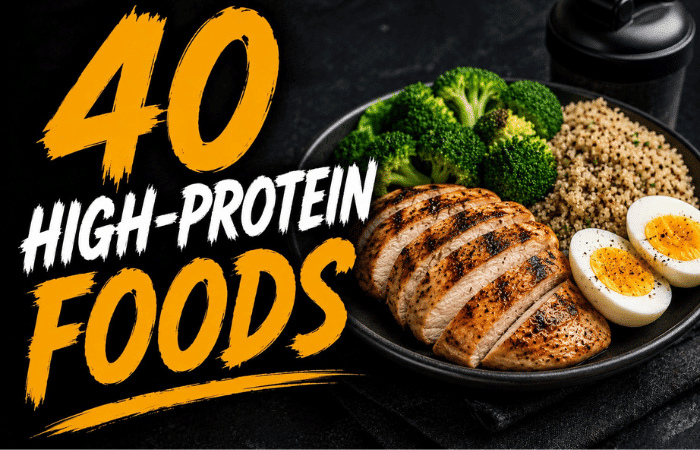
The best way to hit your target is with a variety of high-quality protein sources, including lean meats, fish, eggs, dairy, legumes, and soy. Whole-food sources bring additional nutrients along with their protein, so they should form the base of your intake. Our guide to high-protein foods lists 40 great options with their protein content. If you find it hard to reach your target through food alone, a protein shake is a convenient top-up, as covered in our guide on how many protein shakes a day.
How to Hit Your Protein Target
The simplest way to reach your daily protein goal is to include a substantial protein source in every meal and to plan ahead. A few practical habits make it easy:
- Anchor every meal with protein. Build each meal around 20 to 40 grams of protein, then add your carbs and vegetables.
- Keep quick options on hand. Greek yogurt, cottage cheese, tinned tuna, eggs, and protein powder make fast, high-protein choices.
- Use shakes to fill gaps. If you're falling short, a shake is an easy way to add 20 to 25 grams.
- Track it at first. Logging your intake for a few days shows you exactly where you stand and how to adjust.
For how protein fits into your wider goals, see our guides on how to build muscle, bulking vs cutting, and how to lose belly fat.
Frequently Asked Questions
How much protein do I need to build muscle? To build muscle, aim for around 1.6 to 2.2 grams of protein per kilogram of bodyweight per day. For an 80 kg person, that's roughly 128 to 176 grams daily. Hitting this range consistently, alongside progressive resistance training, is one of the most important factors in gaining muscle.
How much protein should I eat to lose weight? When losing weight, a higher protein intake of around 1.8 to 2.4 grams per kilogram of bodyweight helps preserve muscle in a calorie deficit and keeps you feeling full. Protein needs are actually highest during fat loss, making it a powerful tool for dieting successfully.
Is 200 grams of protein per day too much? It depends on your bodyweight and goal. For a large, active person building muscle (around 90 to 100 kg), 200 grams is reasonable and within the recommended range. For a smaller or less active person, it's more than necessary, though not harmful for healthy individuals. It simply offers little extra benefit beyond your target.
Can too much protein be harmful? For healthy people, high-protein diets are safe, and the idea that protein harms healthy kidneys is not supported by evidence. However, people with existing kidney disease should follow medical guidance. For everyone else, very high intakes are unnecessary rather than dangerous, offering diminishing returns beyond your goal's range.
How much protein can I absorb per meal? Your body can use protein from meals of any reasonable size, but for maximising muscle building, meals of around 20 to 40 grams of protein are ideal. Spreading your intake across three or four such meals is slightly more effective than loading it all into one, though your total daily intake matters most.
The Bottom Line
How much protein you need comes down to your goal: about 0.8 grams per kilogram for basic health, 1.2 to 1.6 for general fitness, 1.6 to 2.2 for building muscle, and 1.8 to 2.4 for losing fat while preserving muscle. Calculating your target from your own bodyweight is the reliable way to get it right, and spreading that protein across your meals makes it more effective still.
Hit your daily protein target consistently from a variety of quality sources, and you've taken care of one of the biggest levers in nutrition. Whether you're chasing muscle, fat loss, or simply better health, getting your protein right will move you closer to your goal than almost any other single change you can make.
Sources
- International Society of Sports Nutrition Position Stand: Protein and Exercise (Jäger et al., 2017) — https://pubmed.ncbi.nlm.nih.gov/28642676/
- Harvard T.H. Chan School of Public Health, The Nutrition Source: Protein — https://nutritionsource.hsph.harvard.edu/what-should-you-eat/protein/
- Examine: Protein Intake Guide — https://examine.com/

I'm Tomek, your dedicated fitness coach at TheGymGoat. With years of experience as a certified personal trainer, fitness blogger and a passion for empowering individuals, I'm committed to helping you reach your health and wellness goals. I don't do excuses, I make priorities and always base my workout and diet on reserach.
All articles by Tomek →