


ON THIS PAGE
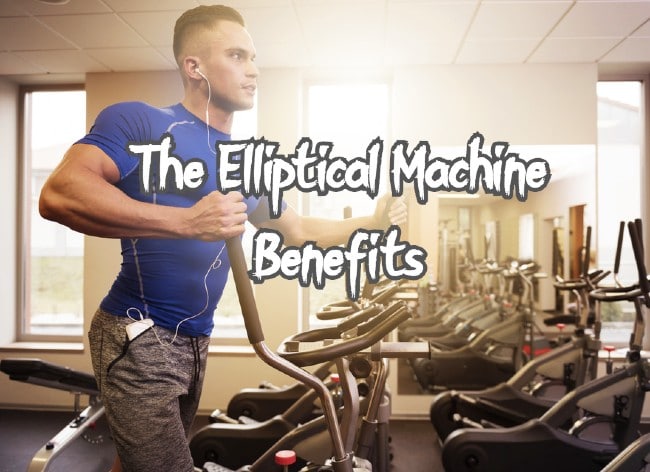
Walk into almost any gym and you’ll see a row of elliptical machines, and there’s a good reason they’re so popular. The elliptical delivers a genuinely effective cardiovascular workout while being remarkably gentle on your joints, and unlike most cardio machines, it can work your upper body as well as your legs. That combination makes it one of the most accessible and versatile pieces of cardio equipment around.
Here’s a complete look at the real benefits of the elliptical machine, its honest limitations, and how to get the most out of every session.
This article is informational and not a substitute for individual medical advice.
What Is an Elliptical Machine?
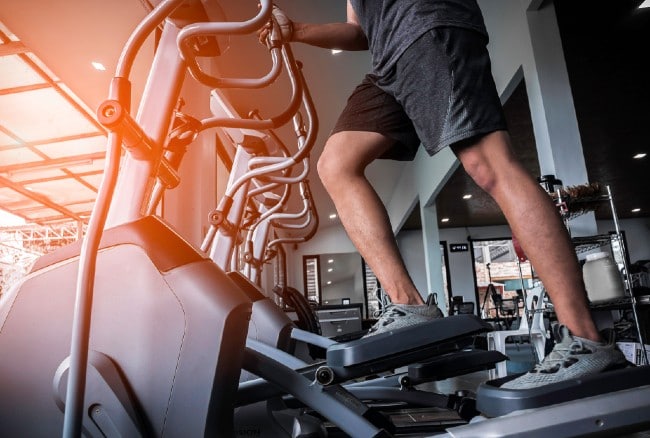
An elliptical machine, sometimes called a cross trainer, is a stationary cardio machine that blends the motions of walking, running, and stair climbing into one smooth, gliding movement. Its defining feature is that your feet stay in constant contact with the pedals throughout, tracing an elongated oval, or elliptical, path, which is where it gets its name. Because your feet never lift off and strike a surface, you get the cardiovascular benefits of running without the jarring impact.
Most ellipticals also come with moving handlebars, allowing you to push and pull with your arms as you stride. This is what turns the elliptical from a lower-body machine into a genuine full-body workout, a rarity among cardio equipment.
Muscles Worked
The elliptical engages more muscles than most people realise:
- Lower body: glutes, quadriceps, hamstrings, calves, and hip flexors drive the striding motion.
- Upper body: when you use the moving handles, your chest, back, shoulders, biceps, and triceps all contribute.
- Core: your abdominal and back muscles work to keep you stable and upright throughout.
What Are The Elliptical Machine Benefits?
1. Low-Impact and Kind to Your Joints
This is the elliptical’s signature benefit and its biggest selling point. Because your feet never leave the pedals, there’s no repeated impact travelling up through your ankles, knees, hips, and lower back the way there is when running. Studies measuring impact forces have found that elliptical training produces dramatically lower loads than treadmill running, in some cases by as much as 75 percent.
This makes it an outstanding choice for anyone with joint pain, arthritis, or a history of injury, as well as older adults, and it’s frequently one of the first cardio tools used in rehabilitation after knee or hip surgery. You get to work hard and elevate your heart rate without punishing your body.
2. A True Full-Body Workout
Most cardio machines train only your legs, but the elliptical’s moving handlebars let you engage your upper body at the same time. By actively pushing and pulling the handles in sync with your stride, you bring your chest, back, arms, and shoulders into the workout alongside your legs and glutes.
This means you burn more calories and build more overall muscular endurance in the same amount of time, and it’s a big part of what sets the elliptical apart from a bike or treadmill. To get this benefit, though, you have to actually drive the handles rather than just resting your hands on them.
3. Excellent Cardiovascular Fitness
At its core, the elliptical is a superb aerobic workout. Striding at a good pace raises your heart rate and makes your heart and lungs work harder to deliver oxygen around your body, which over time strengthens your cardiovascular system and improves your endurance.
It’s an efficient way to build cardiorespiratory fitness and VO2 max, your body’s ability to take in and use oxygen, that underpin overall health and stamina. Like all cardio, regular elliptical sessions support long-term heart health and help you meet the recommended weekly activity guidelines.
4. Burns Calories for Weight Management
The elliptical is an effective calorie burner, especially when you use the handles and push the resistance, and combined with a sensible diet it’s a useful tool for fat loss and weight management. One honest caveat worth knowing: the calorie counter on the machine’s display tends to overestimate how much you’ve actually burned, so don’t take that number as gospel. Focus on working at a genuine effort rather than chasing the readout, and remember that lasting weight loss comes down to overall energy balance, which we cover in our bulking vs cutting guide.
5. Versatile and Endlessly Adjustable
Few cardio machines offer as much variety as the elliptical. You can increase the resistance to make it harder, raise the incline to shift the emphasis onto your glutes and hamstrings, pedal in reverse to target your muscles differently, and choose to use the arms or not. Most machines also offer built-in programmes, including interval and hill workouts. This versatility keeps sessions fresh and lets you tailor the workout to your goals, whether that’s a steady endurance session or a punishing interval workout.
6. Ideal for Rehab and Cross-Training
The elliptical’s low-impact nature makes it invaluable for two groups in particular. For people recovering from injury, it offers a safe way to maintain fitness while the body heals, which is why it features so often in rehabilitation programmes. And for runners and other athletes who take a lot of high-impact pounding, the elliptical is an excellent cross-training tool, letting them build cardiovascular fitness on their easier days without adding more stress to their joints. It’s a smart way to keep training hard while managing wear and tear.
7. Improves Balance and Coordination
Because the elliptical requires your arms and legs to move in a coordinated rhythm while you stay balanced and upright, it quietly trains your coordination, balance, and body awareness. Syncing your upper and lower body through the striding motion develops a degree of inter-limb coordination that walking or cycling doesn’t, and better balance is a genuinely valuable benefit that carries over into daily life, especially as you get older.
8. Beginner-Friendly and Accessible
The elliptical is one of the easiest cardio machines to pick up. The movement is smooth and intuitive, the low impact makes it forgiving, and you can start gently and build up at your own pace. Whether you’re brand new to exercise, returning after a break, or an experienced athlete, the elliptical scales to your level, which is a big part of why it suits almost everyone.
The Honest Limitations
No machine is perfect, and being straight about the elliptical’s downsides helps you use it well:
- It’s easy to coast. The smooth, supported motion makes it tempting to zone out and glide along at a low effort. To actually get fit, you need to consciously push the resistance and intensity, otherwise you’ll get far less from it than it feels.
- The calorie display overestimates. As mentioned, don’t rely on the machine’s calorie count, it’s usually optimistic.
- Less weight-bearing benefit than running. Because the motion is smooth, guided, and low-impact, the elliptical provides less of the bone-strengthening stimulus that higher-impact, weight-bearing activities like running deliver. It’s a fair trade for the joint protection, but it means you shouldn’t rely on it alone for bone health.
- A fixed movement pattern. The guided motion is less natural and functional than running or walking on the ground, so it doesn’t translate to real-world movement quite as directly.
Elliptical vs Treadmill
These two machines are natural rivals. The treadmill offers a more natural, weight-bearing running or walking motion that’s better for bone density and more directly transferable to real life, but it comes with impact that can bother the joints. The elliptical trades some of that natural feel for a much lower-impact, full-body workout that’s far kinder to your joints.
Neither is universally better; the right choice depends on your goals, your joints, and your preference. Many people benefit from using both. If you like the elliptical’s low-impact style, our guide on the arc trainer, a similar machine with a slightly different motion and greater glute emphasis, is worth a look.
How to Get the Most From the Elliptical
- Push the resistance. Don’t just glide. Increase the resistance and incline enough that you’re genuinely working.
- Use the handles actively. Drive and pull the arms to make it a full-body workout, rather than resting your hands on them.
- Keep good posture. Stand tall, engage your core, avoid slumping or leaning heavily on the handles, and drive through your heels.
- Try intervals. Alternating hard and easy periods boosts both fitness and calorie burn and keeps sessions engaging.
- Vary your workouts. Use reverse pedalling, incline changes, and programmes to work your muscles differently and prevent boredom.
Frequently Asked Questions
Is the elliptical a good workout? Yes. It provides an effective full-body cardiovascular workout that strengthens your heart, burns calories, and builds endurance, all while being very gentle on your joints. The key is to push the resistance and use the handles rather than coasting.
Is the elliptical good for weight loss? It can be, as part of a calorie-controlled diet. It burns a solid number of calories, especially at higher intensities using the arms, though the machine’s calorie display tends to overestimate. Combined with good nutrition, it’s a useful fat-loss tool.
Is the elliptical better than running? Neither is simply better. The elliptical is far lower impact and works the upper body, making it kinder to joints, while running is weight-bearing, more natural, and better for bone density. The best choice depends on your joints, goals, and preferences.
Does the elliptical build muscle? It builds muscular endurance in your legs, glutes, and, when you use the handles, your upper body. For significant muscle size and strength, though, you’ll need resistance training, as the elliptical is primarily a cardio machine.
Is the elliptical good for bad knees? Yes, it’s one of the best options for sensitive knees. Because your feet stay on the pedals with no impact, it places minimal stress on the joints, which is why it’s widely recommended for people with knee pain, arthritis, or those recovering from injury.
The Bottom Line
The elliptical machine is a genuinely excellent all-rounder: a low-impact, full-body cardio workout that strengthens your heart, burns calories, and improves your endurance, all while sparing your joints. That makes it ideal for beginners, older adults, people with joint concerns, those in rehab, and athletes looking for low-impact cross-training.
Just remember its main catch, it’s easy to cruise along without really working, so push the resistance, drive the handles, and put in genuine effort. Do that, and pair it with some weight-bearing exercise for your bones, and the elliptical becomes one of the most joint-friendly and effective cardio tools you can use.

Reda El Is a CSCS trainer, Registered Dietitian, ACE-certified nutritionist, With more than 12 years of experience, also he's a Brazilian Jiu-Jitsu competitor, he has done many articles and information sources on many authority sites, such as lifehack.org, Healthline, eat this, wealthygorilla.com, and more. He always keeps improving and updating his knowledge to help everyone to achieve their goals.
All articles by Reda Elmardi →