



ON THIS PAGE
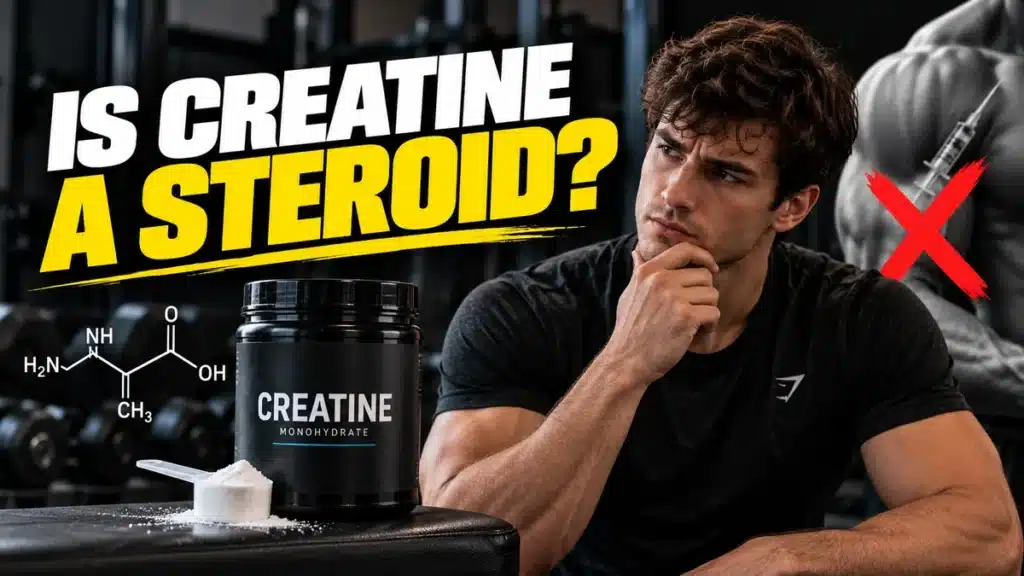
No, creatine is not a steroid. Creatine is a compound your body makes naturally from amino acids and stores mostly in your muscles, where it helps produce energy for short, intense efforts. Anabolic steroids are synthetic versions of testosterone that act as hormones. Creatine does not work like a hormone, does not raise testosterone in a meaningful way, and is not banned in sport.
The confusion is understandable. Creatine helps you build muscle and strength, it comes in a tub from the supplement shop, and it is popular with bodybuilders. But that is where the similarities end. This guide explains what creatine is, how it differs from steroids, what it really does, and what the research says about hair loss, kidneys and water retention.
This article is informational and not a substitute for individual medical advice. If you have kidney disease or another medical condition, speak to your doctor before taking supplements.
What Is Creatine?
Creatine is a naturally occurring compound produced mainly in the liver and kidneys from the amino acids arginine and glycine, with a methyl group supplied by methionine. About 95% of the creatine in your body is stored in skeletal muscle, mostly as phosphocreatine.
Your body needs to replace about 1 to 3 grams of creatine a day. Roughly half comes from your own production and the rest from food, especially red meat and fish. Vegetarians and vegans tend to have lower muscle creatine stores, which is one reason they often respond well to supplements.
In the muscle, phosphocreatine acts as a fast energy reserve. It quickly regenerates ATP, the molecule your muscles use for energy, during short bursts of hard work such as a heavy set or a sprint. More stored creatine means you can sustain those efforts slightly longer, which over time translates into more training volume and better gains.
What Are Anabolic Steroids?
Anabolic-androgenic steroids are synthetic drugs derived from testosterone, the main male sex hormone. They bind to androgen receptors in cells throughout the body and directly switch on processes that build muscle, along with many other effects on the skin, hair, heart, liver and reproductive system.
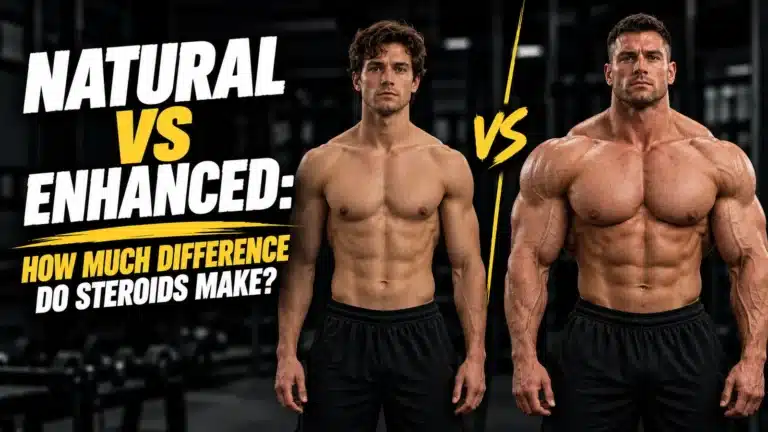
Because they act as hormones, steroids suppress the body’s own testosterone production, which is why users often need post-cycle therapy and why long-term use can leave men with low testosterone. They are prescription or controlled drugs in most countries and are banned in tested sport. Our guide to natural vs enhanced physiques explains just how large their effect on muscle can be.
Creatine vs Steroids: The Key Differences
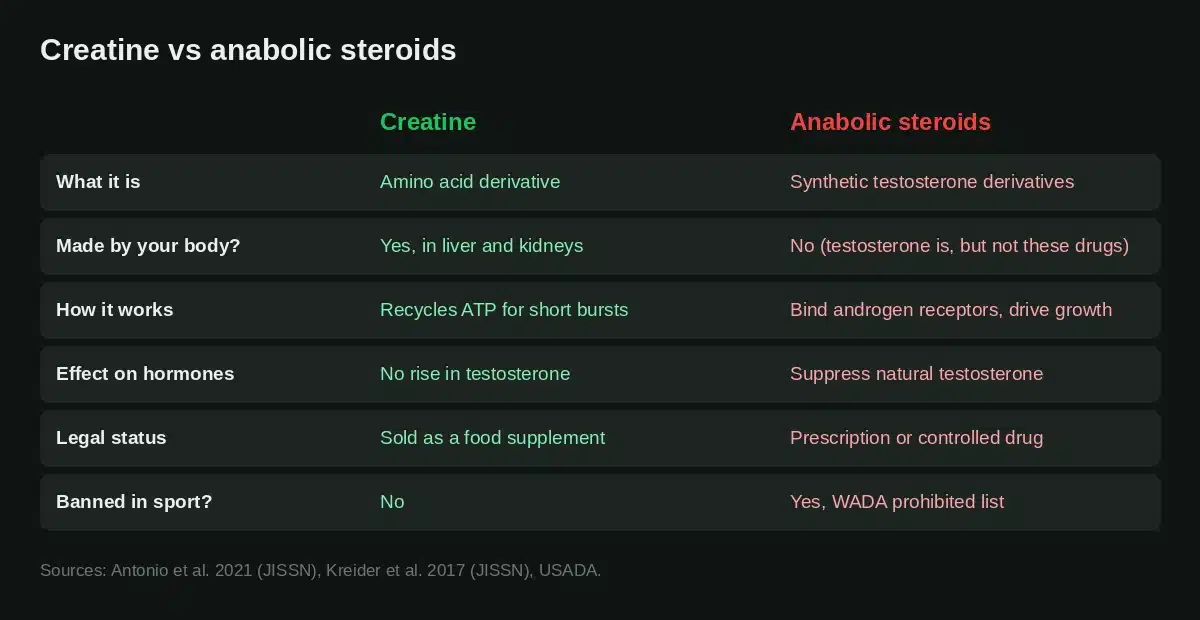
Creatine and steroids differ in what they are, how they work and how they are regulated.
| Creatine | Anabolic steroids | |
|---|---|---|
| What it is | Amino acid derivative | Synthetic testosterone derivatives |
| Produced by your body | Yes, about half of daily needs | No |
| How it works | Increases phosphocreatine for quick energy | Binds androgen receptors and acts as a hormone |
| Effect on your testosterone | No meaningful change | Suppresses natural production |
| Typical muscle gain | Modest, through better training | Large, even without training |
| Legal status | Sold as a food supplement | Prescription or controlled drug |
| Banned in sport | No | Yes |
The difference in effect size is also huge. Creatine helps you train a little harder, and the extra muscle comes from that training. Steroids can build muscle on their own. In a well-known study from 1996, men who took high-dose testosterone without training gained more muscle than men who trained without it.
What Creatine Actually Does
Creatine is one of the most researched supplements in sports nutrition. The International Society of Sports Nutrition calls creatine monohydrate the most effective ergogenic nutritional supplement currently available for increasing high-intensity exercise capacity and lean body mass during training.
- More strength and power: creatine improves performance in repeated short, high-intensity efforts, such as sets in the gym or sprints.
- More muscle over time: better training sessions add up, and studies show greater gains in lean mass when creatine is combined with resistance training.
- Faster recovery between sets: phosphocreatine stores refill quickly, helping you keep quality high across a session.
- Benefits for older adults: in the EU, creatine is even authorised to claim that daily intake can enhance the effect of resistance training on muscle strength in adults over 55.
The official EU health claim for adults doing high-intensity exercise is equally modest: creatine increases physical performance in successive bursts of short-term, high-intensity exercise, with the effect obtained at 3 grams a day. That is what a performance supplement looks like. It is useful, but it does not transform a physique on its own.
Is Creatine Safe?
For healthy people, yes. The ISSN position stand concludes that both short- and long-term creatine supplementation, at doses up to 30 grams a day for five years, is safe and well tolerated in healthy individuals. Most people only need 3 to 5 grams a day.
The main exception is people with existing kidney disease, who should only take creatine after talking to their doctor. Creatine can also raise creatinine, a marker doctors use to check kidney function, without any actual kidney damage. If you have blood tests done, tell your doctor you take creatine so the result is interpreted correctly.
Common Creatine Myths
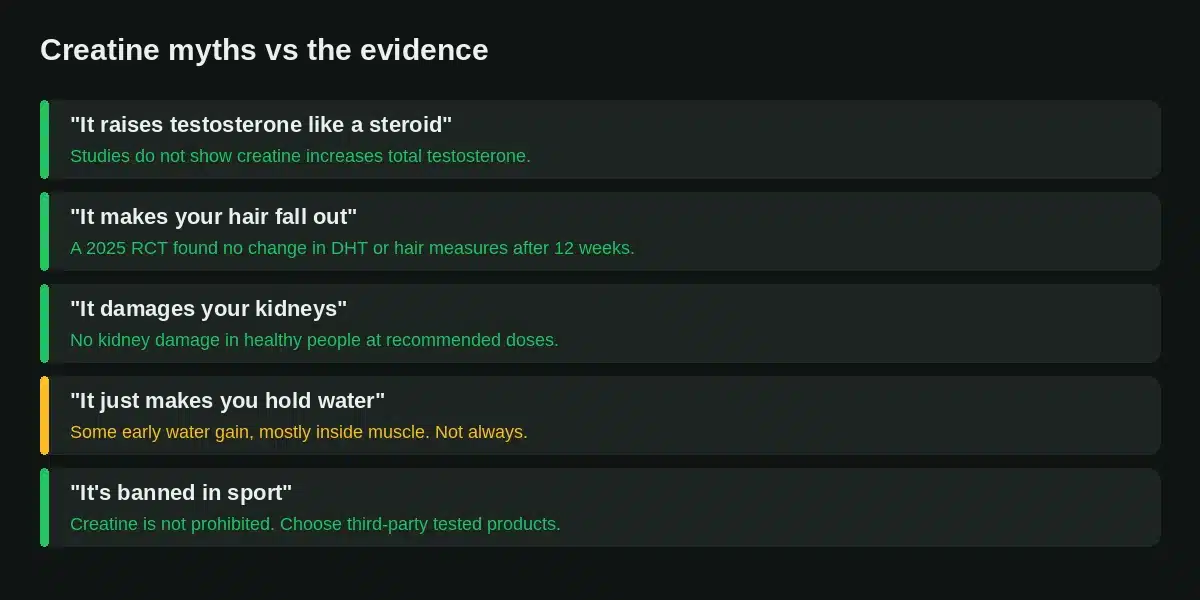
Because creatine sits next to steroids in many people’s minds, a handful of myths keep coming back. Here is what the evidence shows.
Does Creatine Increase Testosterone?
Not in any meaningful way. A 2021 review of the most common creatine questions concluded that the evidence does not show creatine increases total testosterone. That is the clearest difference from steroids, which flood the body with testosterone-like hormones.
Does Creatine Cause Hair Loss?
This myth comes from a single 2009 study in 20 rugby players, which found that DHT, a hormone linked to male pattern baldness, rose by 56% after a week of creatine loading. Testosterone did not change, and the study did not measure hair loss at all.
The finding was never replicated. In 2025, a 12-week randomised controlled trial gave resistance-trained men either 5 grams of creatine a day or a placebo and found no differences in DHT, the DHT to testosterone ratio or any measure of hair growth. The researchers described the results as strong evidence against the claim that creatine causes hair loss.
Is Creatine Bad for Your Kidneys?
Not in healthy people at recommended doses. Reviews of the research have found no kidney damage or loss of kidney function in healthy individuals. Much of the worry comes from the creatinine effect described above, which can look like a kidney problem on a blood test when it is not.
Does Creatine Make You Bloated?
Creatine can cause a small gain in body weight early on, mostly because muscles store more water along with the creatine. That water is inside the muscle, not under the skin, and research shows creatine does not always lead to water retention at all. Skipping the loading phase and taking 3 to 5 grams a day tends to minimise any early weight jump.
Is Creatine Banned in Sport?
No. The US Anti-Doping Agency states plainly that creatine is not prohibited in sport. The real risk for tested athletes is contamination: supplements can occasionally contain banned substances that are not on the label. If you compete in a tested sport, choose a product certified by an independent programme such as NSF Certified for Sport.
How to Take Creatine
- Type: creatine monohydrate is the best-studied and cheapest form. Fancier forms have not been shown to work better.
- Dose: 3 to 5 grams a day is enough for most people.
- Loading: optional. Taking about 20 grams a day split into four doses for 5 to 7 days fills your stores faster, but a daily 3 to 5 gram dose gets you to the same place in three to four weeks.
- Timing: take it whenever is convenient. Consistency matters far more than timing.
- Mixing: stir it into water, juice, a shake or yogurt. See our guide on whether you can dry scoop creatine before trying it straight.
Creatine powder is also very stable. If you have found an old tub at the back of the cupboard, our article on whether creatine can expire explains what to look for.
Frequently Asked Questions
Is creatine a steroid? No. Creatine is a compound made from amino acids that your body produces naturally. Anabolic steroids are synthetic hormones derived from testosterone.
Will creatine make me fail a drug test? No. Creatine is not a prohibited substance. Contaminated supplements are the only real risk, so tested athletes should use third-party certified products.
Can you take creatine and still be natural? Yes. Creatine is a legal supplement that natural bodybuilders use routinely, and it is allowed in drug-tested federations. Our list of the biggest natural bodybuilders includes athletes who use it.
Is creatine safe for teenagers? Research in adolescents is more limited than in adults. Teenagers should focus on training, food and sleep first and speak to a doctor or sports dietitian before taking any supplement.
Do you need to cycle creatine? No. There is no evidence that cycling on and off improves results or safety. Most people simply take it every day.
Do women benefit from creatine? Yes. Women see similar improvements in strength and training capacity, and creatine is just as safe for them.
The Bottom Line
Creatine is not a steroid. It is a natural compound your body already makes, it works by helping your muscles regenerate energy during short, hard efforts, and it does not act as a hormone or meaningfully change your testosterone. It is legal in sport, safe for healthy people at recommended doses, and one of the best-supported supplements available.
If you want more muscle and strength without drugs, creatine monohydrate at 3 to 5 grams a day is a sensible addition to good training and nutrition. Combine it with the fundamentals in our guide on how to build muscle, and remember that the supplement only works if the training does.
Sources
- Kreider RB, Kalman DS, Antonio J et al. International Society of Sports Nutrition position stand: safety and efficacy of creatine supplementation in exercise, sport, and medicine. Journal of the International Society of Sports Nutrition, 2017.
- Antonio J, Candow DG, Forbes SC et al. Common questions and misconceptions about creatine supplementation: what does the scientific evidence really show? Journal of the International Society of Sports Nutrition, 2021.
- Lak M, Forbes SC, Ashtary-Larky D et al. Does creatine cause hair loss? A 12-week randomized controlled trial. Journal of the International Society of Sports Nutrition, 2025.
- van der Merwe J, Brooks NE, Myburgh KH. Three weeks of creatine monohydrate supplementation affects dihydrotestosterone to testosterone ratio in college-aged rugby players. Clinical Journal of Sport Medicine, 2009.
- Bhasin S, Storer TW, Berman N et al. The effects of supraphysiologic doses of testosterone on muscle size and strength in normal men. New England Journal of Medicine, 1996.
- US Anti-Doping Agency. Is creatine prohibited?

I'm Tomek, your dedicated fitness coach at TheGymGoat. With years of experience as a certified personal trainer, fitness blogger and a passion for empowering individuals, I'm committed to helping you reach your health and wellness goals. I don't do excuses, I make priorities and always base my workout and diet on reserach.
All articles by Tomek →