



ON THIS PAGE
The deadlift is, pound for pound, one of the purest tests of strength in the gym. There are no machines to assist you and no momentum to hide behind. You grip the bar, you pull, and either it comes off the floor or it doesn’t. That honesty is exactly why lifters love it, and why it remains one of the most respected exercises in all of strength training.
It’s also one of the most beneficial. The deadlift builds the entire posterior chain, develops total-body strength, and carries over into nearly everything else you do. Below we cover what it offers, how to do it safely, and how to build a bigger pull.
This article is informational. The deadlift is technical and form-dependent, so consider working with a qualified coach when learning it.
A Quick Note on the Greats
To appreciate the deadlift’s place in strength culture, look at how far the top end has been pushed. UK powerlifter Andy Bolton became the first human to deadlift 1,000 lbs in 2006. Eddie Hall then made history as the first man to pull 500 kg in 2016. His great rival, Iceland’s Hafthor “Thor” Björnsson, has since taken the all-time record to new heights, progressing from 501 kg to 505 kg and then to 510 kg (1,124 lbs) at the 2025 World Deadlift Championships, where it still stands. As recently as 2026, both Björnsson and reigning World’s Strongest Man Mitchell Hooper attempted 515 kg and came up short, a reminder of just how close to the limit these numbers are.
You’ll likely never approach those weights, and that’s entirely the point. The benefits of deadlifting have nothing to do with chasing world records and everything to do with what the lift does for an ordinary trainee.
What Is a Deadlift?
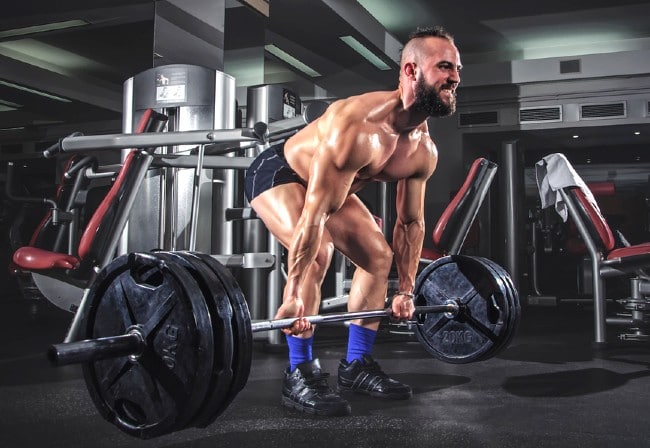
The deadlift is a full-body compound movement. You grip a loaded barbell on the floor and lift it by driving through your legs and extending your hips until you’re standing tall with the bar at thigh height, then lower it under control. Eddie Hall once described it simply as an A-to-B exercise: A is the bar on the floor, B is standing locked out.
Simple to describe, but not simply a matter of yanking the bar up. Form is everything. Round your lower back under a heavy load and you risk a serious, painful injury. Done correctly, though, it’s one of the safest and most productive lifts there is.
Muscles Worked
| Muscle group | Role |
|---|---|
| Glutes and hamstrings | Primary drivers of hip extension |
| Spinal erectors (lower back) | Hold a rigid, neutral spine |
| Lats and upper back | Keep the bar close and stable |
| Trapezius | Stabilise the shoulders under load |
| Quadriceps | Drive the bar off the floor |
| Core | Braces hard throughout |
| Forearms and grip | Hold onto a heavy, loaded bar |
That recruitment list is why the deadlift sits alongside the squat as a cornerstone of serious strength training. For a direct comparison of the two, our squat vs deadlift breakdown is worth a read.
How to Deadlift With Correct Form
Here’s a clean, safe setup. Learn it light before adding weight.
- Set your feet about hip-width apart, with the bar over your mid-foot, close to your shins.
- Hinge and grip. Push your hips back and bend to grip the bar just outside your legs, with an overhand or mixed grip.
- Set your back. Drop your hips, lift your chest, and pull the slack out of the bar. Your back should be flat and neutral, never rounded. Engage your lats by imagining you’re squeezing oranges in your armpits.
- Brace. Take a big breath into your belly and brace your core hard, as if about to be punched.
- Drive. Push the floor away through your legs, keeping the bar dragging close to your body. As it passes your knees, drive your hips forward to lock out.
- Lock out. Stand tall with hips and knees extended, without leaning back or overextending.
- Lower under control. Push your hips back and guide the bar down the same path. Reset between reps rather than bouncing.
The golden rule: if your form breaks down, the set is over. No single rep is worth a back injury.
The Main Benefits of Deadlifts
1. Total-Body Strength
The deadlift trains more muscle simultaneously than almost any other movement, which makes it unrivalled for building raw, all-over strength. Because it’s so demanding and recruits so much muscle, it tends to raise your strength across the board, helping your other lifts improve too.
2. A Powerful Posterior Chain
The glutes, hamstrings, and spinal erectors, collectively the posterior chain, are the engine of the deadlift. These muscles are often underdeveloped from modern sedentary life, and strengthening them improves athletic power and resilience. The deadlift also builds the glutes effectively, so while it won’t isolate them the way a hip thrust does, it’s a genuine contributor to a stronger, shapelier backside, as covered in our guide on how to get a bigger butt.
3. A Stronger, More Muscular Back
Few exercises build the back like the deadlift. The lats, traps, and erectors all work hard to stabilise and move the load, developing the thickness and width that give the back its powerful look while reinforcing the muscles that protect your spine.
4. Serious Grip and Forearm Strength
Holding a heavy bar forces your grip to work overtime, and grip strength carries over to pull-ups, rows, and daily life. A strong grip is one of the most useful and transferable qualities you can build.
5. A True Functional Movement
The deadlift mirrors one of the most fundamental human movements: picking something up off the ground. Training it properly teaches you to hinge safely, which directly reduces your risk of hurting yourself when you lift a heavy object in everyday life.
6. Better Posture
By strengthening the spinal erectors and core, the muscles responsible for holding you upright, deadlifts can help counteract the rounded posture so many of us develop from hours at a desk or on a phone. A stronger back tends to mean a more upright, confident stance.
7. Supports Fat Loss
As a hugely demanding compound lift, the deadlift burns significant energy and builds the lean muscle that supports your metabolism. Paired with sensible nutrition, it’s a strong contributor to fat loss. Cardio isn’t the only route to getting leaner.
8. Helps Break Through Plateaus
Because deadlifts build such broad strength, they often jolt progress when other lifts stall. Adding or refocusing on deadlifts can carry over and help you push past a sticking point elsewhere in your programme.
9. Builds a Stronger Core
Bracing against a heavy load forces your core stabilisers to fire hard throughout every rep. You don’t need endless sit-ups for a strong midsection when heavy hinging is already training it under real load.
10. A Genuine Hormonal Stimulus
Heavy compound lifts like the deadlift produce an acute rise in anabolic hormones such as testosterone and growth hormone. Keep this in perspective, though: those short-term spikes contribute less to muscle growth than your total training volume, consistency, and nutrition. It’s a small bonus rather than the main mechanism.
11. Improved Athletic Performance
The explosive hip extension the deadlift develops transfers to sprinting, jumping, and contact sports, which is why athletes across football, rugby, and even golf incorporate it. Pro golfer Rory McIlroy is well known for heavy strength training, deadlifts included, as part of building the power behind his game.
12. Versatility and Variety
The deadlift family is large, and each variation shifts the emphasis. This keeps training fresh and lets you target weak points:
| Variation | Emphasis |
|---|---|
| Conventional | Balanced full posterior chain |
| Sumo | More quads and adductors, shorter range |
| Romanian (RDL) | Hamstrings and glutes, controlled eccentric |
| Stiff-legged | Hamstring and lower-back emphasis |
| Deficit | Greater range, strength off the floor |
| Snatch-grip | Upper back and range of motion |
You can also perform them with dumbbells or specialty bars, making the deadlift accessible whether you train in a commercial gym, a CrossFit box, or a home setup with just a barbell and plates.
13. Supports Long-Term Health
Resistance training like deadlifting supports bone density and, over time, contributes to cardiovascular fitness and healthier blood pressure regulation as part of an active lifestyle. A quick caveat worth knowing: heavy lifting raises blood pressure acutely during the set, so if you have a cardiovascular condition, check with your doctor and prioritise breathing technique.
14. Confidence and Capability
There’s no denying it feels good to get strong. Watching your deadlift climb builds real self-confidence, and the sense of physical capability it brings extends well beyond the gym floor.
How to Improve Your Deadlift
If your pull has stalled, these are reliable ways to build it:
Strengthen your legs with accessory work. The leg press and other lower-body movements build the quad and hip drive that powers the bar off the floor.
Train your grip directly. Often it’s the grip that fails before the muscles. Heavy holds, farmer’s carries, and pull-ups all help.
Use straps for your heaviest back-off work. Straps let you keep training the muscles when your grip is the limiting factor. They’re banned in powerlifting but allowed in strongman, so use them as a tool, not a crutch, and still train your grip separately.
Practise the lift. Skill matters. Pulling regularly with good technique at a range of loads ingrains the pattern and builds the pull.
Try paused deadlifts. Instead of bouncing each rep off the floor, let the bar fully settle, then pull again from a dead stop. This builds power off the floor and reinforces tightness through the lats and hamstrings.
For help fitting deadlifts into a balanced week, see our guide on how many exercises per muscle group, and consider building your week around a structure like a push, pull, legs split, where deadlifts anchor your pull or leg day.
Frequently Asked Questions:
Are Deadlifts For Back Day Or Legs Day?
Both, which is why programming varies. Many lifters place them on back or pull day because of the heavy back and grip involvement, while others program them on leg day, given the strong posterior-chain and quad contribution. Either works; choose based on your split and recovery.
How Many Deadlifts Should I Do?
For most people, once or twice a week is plenty, with adequate recovery between heavy sessions. Deadlifts are taxing on the whole body and nervous system, so more is not automatically better.
How many reps should I do?
It depends on your goal. For maximal strength, lower reps with heavier loads work well, often in the 3 to 5 range. For muscle and general development, moderate reps around 6 to 10 are effective. In all cases, stop the set when your form starts to break down.
Are deadlifts safe?
Yes, when performed with correct form and sensible loading. The main risk comes from rounding the lower back under heavy weight. Master the hinge, brace properly, and progress gradually, and the deadlift is both safe and genuinely protective against injury.
Can I deadlift at home?
Absolutely. All you need is a barbell, plates, and a firm, flat surface, which makes it one of the most accessible serious strength exercises for a home gym.
The Bottom Line
The deadlift earns every bit of its reputation. It builds total-body strength, a powerful posterior chain, a muscular back, and the kind of functional capability that carries into daily life and sport. The one rule that matters above all others is form: master the hinge, keep a flat back, brace hard, and never chase a number at the expense of your technique.
Whether you want to build a stronger back, move better in everyday life, or simply feel powerful, the deadlift belongs in your training. Learn it properly, progress patiently, and it will reward you for years.

Reda El Is a CSCS trainer, Registered Dietitian, ACE-certified nutritionist, With more than 12 years of experience, also he's a Brazilian Jiu-Jitsu competitor, he has done many articles and information sources on many authority sites, such as lifehack.org, Healthline, eat this, wealthygorilla.com, and more. He always keeps improving and updating his knowledge to help everyone to achieve their goals.
All articles by Reda Elmardi →