



ON THIS PAGE
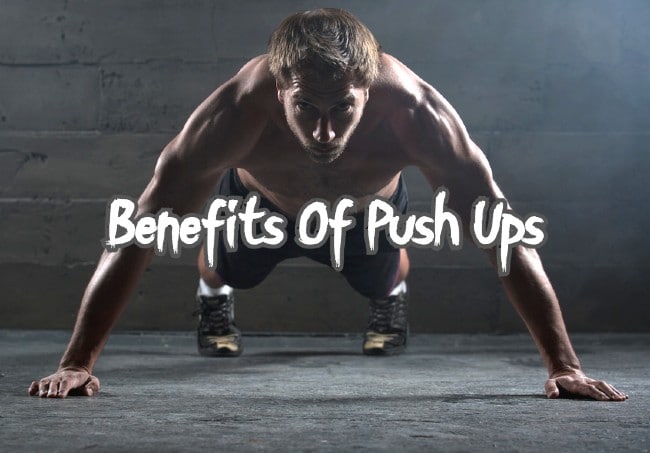
The push-up might be the most underrated exercise in fitness. No equipment, no gym, no cost, just you and the floor. Yet behind that simplicity is one of the most effective bodyweight movements ever devised, capable of building real strength, muscle, and athleticism.
People chasing a bigger chest often reach straight for the bench press and cable machines and treat push-ups as an afterthought. That’s a mistake. Done with intent and progressed properly, the humble push-up holds its own. Here’s a clear look at what it does and why it deserves a place in your training.
This article is informational and not a substitute for individual medical or training advice.
What Is a Push-Up?
A push-up is a bodyweight resistance exercise, one of the cornerstones of calisthenics. You lower and raise your body from a face-down position using your arms, with your own bodyweight providing the resistance. To be clear on a common mix-up, a standard push-up is not a plyometric exercise. Plyometrics are explosive movements like clapping push-ups; the regular version is a controlled strength movement.
It’s a true compound exercise, working several muscle groups at once:
| Muscle group | Role |
|---|---|
| Pectorals (chest) | Primary mover |
| Triceps | Extend the elbows, major contributor |
| Anterior deltoids | Assist the press |
| Core | Braces to keep the body rigid |
| Serratus and upper back | Stabilise the shoulders |
That full-body involvement, with no equipment at all, is what makes the push-up so efficient.
So, What Are The Many Benefits Of Push-Ups?
1. Builds Chest, Triceps, and Shoulder Muscle
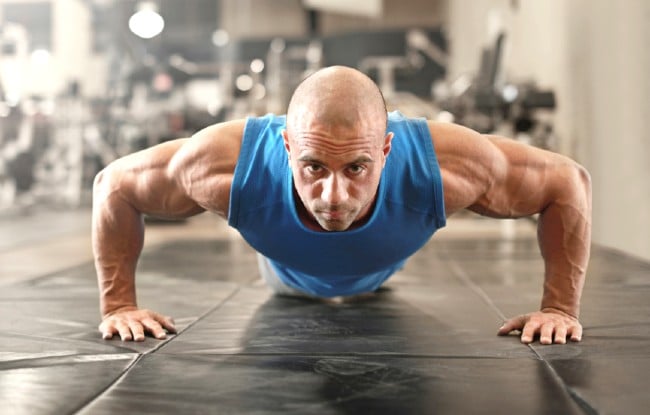
Push-ups are an excellent chest builder, which is why almost every bodybuilder includes some version of them. They develop the pectorals while also hitting the triceps and front delts. By adjusting your hand position, you can shift the emphasis, with a wider placement targeting the chest more and a narrower placement loading the triceps, much like a close-grip bench press. Pair them with dumbbell chest work , and you’ve got a well-rounded chest routine.
2. Develops Real Strength
You don’t need a loaded barbell to get strong. Push-ups build genuine pressing strength and, done with enough resistance, drive muscle growth too. They won’t replace heavy lifting if your goal is a powerlifting total, but as a strength builder for the upper body, they’re far more effective than most people give them credit for.
3. Builds Muscle (With Progressive Overload)
Push-ups are resistance training, so they can absolutely build muscle. The catch is the same as with any calisthenics movement: you need progressive overload. As they get easier, you have to make them harder through tougher variations, more reps, slower tempo, or added load with a weighted vest. Keep doing the same easy sets and progress stalls. Keep raising the difficulty and the muscle keeps coming.
4. Improves Functional Strength
A push-up trains your body to move as a coordinated unit, bracing the core while pressing with the upper body. That translates into real-world capability, the kind of strength that helps you push, lift, and carry in everyday life rather than strength confined to a single machine.
5. Supports Cardiovascular Fitness (Backed by Research)
Here’s a genuinely science-backed point, stated accurately. A 2019 Harvard study published in JAMA Network Open followed over 1,100 active middle-aged men and found that those who could do more than 40 push-ups had a markedly lower rate of cardiovascular events over the following decade than those who could manage fewer than 10.
The important nuance: this shows push-up capacity is a strong marker of overall fitness, not proof that doing push-ups directly prevents heart disease, and the study looked only at active men so it may not generalise to everyone. Still, it’s a striking illustration of how closely push-up ability tracks with general health and fitness.
6. Easy to Learn
Some lifts take weeks to learn safely. The push-up is not one of them. The movement is simple enough that it’s taught to schoolchildren, which means you can start today with very little instruction. That low barrier to entry is a real advantage.
7. Suitable for Almost Anyone
From a beginner to a seasoned athlete, push-ups scale to the individual. If a full push-up is too challenging, you can do them from your knees or against an elevated surface like a bench or wall. As you get stronger, you progress toward harder versions. Almost anyone who can support their bodyweight can find a suitable starting point.
8. Endlessly Scalable in Difficulty
This is what keeps push-ups challenging for life. Too easy? Elevate your feet, slow the tempo, add a weighted vest, or progress toward decline, archer, or eventually one-arm variations. Too hard? Regress to knees or an incline. Few exercises offer this much range from the same basic movement.
9. So Many Variations
Beyond difficulty, push-ups offer a huge variety to target different areas and keep training fresh. Standard, close-grip for triceps, wide for chest, decline for upper chest, diamond, and explosive clapping versions all bring something different. That variety pairs naturally with pulling work like pull-ups for balanced upper-body development.
10. A Brilliant Chest Finisher
Push-ups make an outstanding way to end a chest session. After your heavy pressing, a few high-rep sets to failure drive a serious pump and fully fatigue the muscle, adding extra volume and a strong hypertrophy stimulus. They slot neatly into proven routines like the PHUL and PHAT programmes.
11. Free and Doable Anywhere
Push-ups cost nothing and require no equipment or membership. A small patch of floor is all you need, whether you’re at home, in a hotel, at the park, or squeezing a quick set in at work. For consistency, that convenience is hard to beat, since the easiest workout to do is the one with no barriers to starting.
12. Supports Mental Wellbeing
Like all exercise, push-ups contribute to better mental health by releasing endorphins, supporting sleep, and giving you a sense of progress. Their accessibility makes it easy to stay consistent, and consistency is what makes the mood and well-being benefits stick.
How to Do a Proper Push-Up
Good form turns a decent exercise into a great one:
- Start in a plank position, hands roughly shoulder-width apart, body in a straight line from head to heels.
- Brace your core and squeeze your glutes to keep your hips from sagging.
- Lower under control until your chest is just above the floor, elbows tracking back at around 45 degrees rather than flaring straight out.
- Press back up powerfully without locking out aggressively, keeping that straight body line throughout.
Quality beats quantity. Five clean push-ups do more than twenty sloppy ones.There’s more to it than this, but basically, push-ups require individuals to raise and lower the body from a prone position multiple times.
Can push-ups build a bigger chest?
Yes. They effectively develop the chest, triceps, and shoulders, especially when you progress the difficulty over time. For maximum size, combine them with other pressing work, but push-ups alone can build a noticeably stronger, fuller chest.
How many push-ups should I do a day?
There’s no single magic number. Focus on quality sets taken close to a challenging effort, a few times a week, and progress over time. As push-ups get easier, make them harder rather than simply chasing ever-higher rep counts.
Are push-ups enough on their own?
For general upper-body pressing strength and fitness, they’re a strong foundation. For balanced development you’ll want to add pulling movements like pull-ups and rows, and some lower-body work, since push-ups don’t train the back or legs.
Do push-ups really indicate heart health?
Push-up capacity has been shown to correlate strongly with cardiovascular fitness in research on active men, making it a useful marker of overall fitness. It reflects your fitness level rather than directly preventing disease on its own.
What muscles do push-ups work?
Primarily the chest, triceps, and front shoulders, with the core working hard to stabilise the body and the upper back assisting. That’s what makes them such an efficient full-upper-body movement.
The Bottom Line
The push-up proves that effective training doesn’t require a fully equipped gym. It builds the chest, triceps, and shoulders, develops functional strength, scales to any ability, and can be done anywhere for free. The key is to treat it as real resistance training: keep your form clean and keep increasing the difficulty as you get stronger.
Whether you use them as a main movement, a finisher, or your go-to when you can’t get to the gym, push-ups belong in nearly everyone’s routine. Drop down and give a few a go.

Reda El Is a CSCS trainer, Registered Dietitian, ACE-certified nutritionist, With more than 12 years of experience, also he's a Brazilian Jiu-Jitsu competitor, he has done many articles and information sources on many authority sites, such as lifehack.org, Healthline, eat this, wealthygorilla.com, and more. He always keeps improving and updating his knowledge to help everyone to achieve their goals.
All articles by Reda Elmardi →