




ON THIS PAGE
Don’t let their simple appearance fool you. Resistance bands, those humble loops and tubes of stretchy rubber, are one of the most versatile, effective, and underrated pieces of fitness equipment you can own. They can build real strength and muscle, aid recovery, improve mobility, and travel anywhere, all for a fraction of the cost and space of a set of weights.
Here’s a complete look at the real benefits of resistance bands, their honest limitations, and how to make the most of them.
This article is informational and not a substitute for individual medical advice.
What Are Resistance Bands?
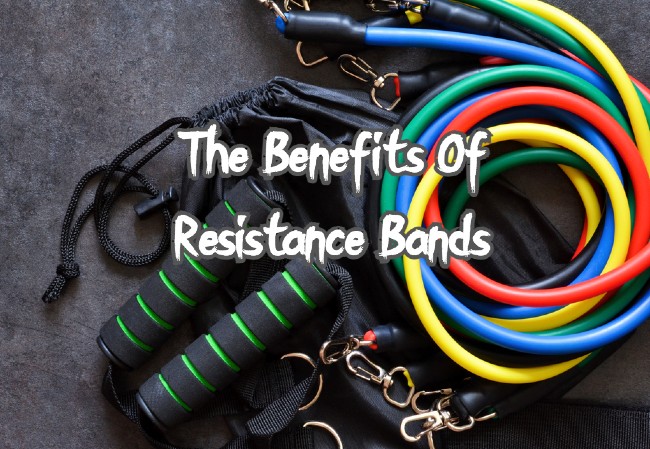
Resistance bands are elastic bands, usually made of latex, rubber, or fabric, that add resistance to your exercises. They come in several forms, including looped mini bands, tube bands with handles, flat therapy bands, and large “power” bands, and in a range of strengths from light to very heavy.
They work on a simple but clever principle: as you stretch the band, the tension increases. This means the resistance builds progressively through the movement, and the muscle stays under tension throughout the entire range of motion, a slightly different stimulus from the constant load of a dumbbell. That variable resistance is part of what makes bands so effective and unique.
1. Incredibly Versatile and Full-Body
The greatest strength of resistance bands is their sheer versatility. You can use them to train virtually every muscle in your body, looping them around your limbs, anchoring them to a door, or holding them to add resistance to almost any movement. From squats and rows to presses, curls, and glute work, the exercise options are practically endless, letting you get a complete full-body workout from a single, simple tool.
2. They Build Real Strength and Muscle
Here’s the point that surprises people: resistance bands aren’t just a light warm-up tool, they genuinely build strength and muscle. By providing resistance for your muscles to work against, they stimulate the same muscle-building process as weights.
In fact, research comparing resistance band training with conventional free-weight training has found that both can produce similar improvements in strength and power. The constant tension bands provide keeps your muscles working hard through the whole movement, and you can progress by using thicker, stronger bands or increasing the stretch, just as you’d add weight to a barbell.
3. Affordable, Portable, and Perfect for Home
Few fitness tools offer such value. Resistance bands cost a tiny fraction of what a set of weights or a gym membership does, making effective strength training accessible to almost any budget. They’re also lightweight and compact, essentially a whole gym you can fit in a bag, which makes them ideal for training at home, in a small space, or while travelling. Wherever you are, an effective workout is always within reach.
4. Gentle on Your Joints
The smooth, elastic nature of resistance bands makes them low-impact and kind to your joints. Unlike the sudden loading that can come with heavy weights, bands apply resistance gradually and fluidly, reducing stress on your joints and the risk of injury. This makes them an excellent choice for beginners, older adults, and anyone who needs a gentler approach to strength training.
5. Excellent for Rehab and Injury Prevention
Resistance bands are a staple of physical therapy for good reason. Their controlled, adjustable, light-to-moderate resistance is perfect for safely rebuilding strength and mobility after an injury, which is why physiotherapists rely on them so heavily. They’re equally valuable for preventing injuries in the first place, being ideal for warming up and strengthening vulnerable areas like the rotator cuff and shoulders before you lift heavier.
6. Variable Resistance and Better Muscle Activation
The way bands increase in tension as they stretch gives them a unique quality: the resistance is often greatest at the point where your muscle is strongest, which can suit certain movements well. Just as importantly, controlling an unstable, elastic band recruits your smaller stabilising muscles more than fixed machines do. These stabilisers support your joints and larger muscles, improving your control and helping reduce injury risk.
7. Improves Balance, Posture, and Functional Strength
Because band exercises often challenge your stability and train your body through natural, multi-joint movements, they build functional strength, the kind you use in real life. Research has also shown that regular resistance band training can improve balance and posture, particularly in older adults, where it supports better stability and a reduced risk of falls. Strengthening the back, shoulders, and core with bands is a simple way to stand taller and move better.
8. Great for Warm-Ups and Muscle Activation
Bands are one of the best tools for warming up and “activating” muscles before a heavier workout. Exercises like band pull-aparts prime the shoulders and upper back, while looped bands are perfect for switching on the glutes before squats or deadlifts. A few minutes of band work gets the blood flowing, loosens tight muscles, and prepares your body to train safely, complementing a good stretching routine.
9. They Enhance Bodyweight Training
Resistance bands work brilliantly alongside bodyweight exercises. They can add resistance to movements like push-upsand squats to make them harder, or assist you on challenging exercises, band-assisted pull-ups being a classic way to build up to doing them unassisted. This makes them a perfect partner for calisthenics and a great way to add progressive resistance to squat alternatives and home workouts.
The Honest Limitations
To use bands wisely, it helps to know where they fall short:
- Limited maximal load. While bands build real strength, it’s harder to load them as heavily as a barbell. Advanced lifters chasing maximum strength and size will eventually find that bands alone can’t match heavy free weights, so they work best as a supplement at that level rather than a full replacement.
- A different resistance curve. Bands are easiest at the start of the movement and hardest at the end, which is a different feel from weights and suits some exercises better than others.
- They wear out and can snap. Bands degrade over time and can break if damaged or overstretched, which can cause injury. Inspect them regularly and replace any that show wear.
- Harder to track precisely. It’s tougher to measure exact resistance and progression with bands than with numbered weights.
Types of Resistance Bands
- Loop (mini) bands: small continuous loops, great for glute activation and lower-body work.
- Tube bands with handles: offer a grip for pressing, rowing, and curling movements.
- Flat therapy bands: thin, light bands ideal for rehab and mobility work.
- Power (pull-up) bands: large, strong loops used for assisted pull-ups, heavy resistance, and mobility.
A basic set covering a few strengths will handle almost any exercise you’d want to do.
Who Are Resistance Bands For?
The honest answer is everyone. They’re perfect for beginners starting out, people training at home or travelling, older adults wanting joint-friendly strength work, and anyone recovering from or guarding against injury. Even advanced lifters use them for warm-ups, activation, and adding variety. Whatever your level, resistance bands earn their place in your kit.
Frequently Asked Questions
Do resistance bands actually build muscle? Yes. Resistance bands provide the tension your muscles need to grow, and research shows band training can build strength and muscle comparably to free weights. The key, as with any training, is to work hard and progressively increase the resistance over time.
Are resistance bands as good as weights? For building strength, muscle, and general fitness, they’re highly effective and comparable to weights, especially for beginners and intermediate trainees. However, for lifting maximal loads and advanced strength or size gains, heavy free weights have the edge. Many people use both.
Are resistance bands good for beginners? Excellent, in fact. They’re affordable, easy to use, gentle on the joints, and scalable, making them one of the best ways for beginners to start strength training safely at home or in the gym.
Can you build a full workout with just resistance bands? Yes. Resistance bands can train every major muscle group, so you can build a complete, effective full-body workout using nothing else, which is what makes them so popular for home and travel training.
How do I make resistance band exercises harder? Use a thicker, stronger band, increase the stretch by shortening the band or standing further from the anchor, or slow down your reps for more time under tension. Progressing the resistance over time is what drives continued results.
The Bottom Line
Resistance bands are a genuinely brilliant, versatile, and affordable training tool that far too many people overlook. They build real strength and muscle, aid recovery, improve mobility and balance, and go anywhere, all for very little money and space. For home workouts, travel, rehab, warm-ups, and adding variety, they’re hard to beat.
Just know their limits: for maximal strength and size, they work best alongside heavier training rather than replacing it entirely, and you should keep an eye on wear for safety. Used well, a simple set of resistance bands really can be a whole gym in a bag, and one of the smartest fitness investments you’ll ever make.

Reda El Is a CSCS trainer, Registered Dietitian, ACE-certified nutritionist, With more than 12 years of experience, also he's a Brazilian Jiu-Jitsu competitor, he has done many articles and information sources on many authority sites, such as lifehack.org, Healthline, eat this, wealthygorilla.com, and more. He always keeps improving and updating his knowledge to help everyone to achieve their goals.
All articles by Reda Elmardi →