




ON THIS PAGE
Swimming is one of the few exercises that genuinely works your entire body while going easy on your joints. It builds cardiovascular fitness, strengthens muscles from head to toe, burns serious calories, and calms the mind, all in an environment that supports your bodyweight and cushions every movement. Whether you’re a lifelong athlete, recovering from injury, or just looking for a workout that doesn’t punish your knees, few activities offer as complete a package.
Here’s a full look at the real benefits of swimming, what it can and can’t do, and how to make the most of your time in the pool.
This article is informational and not a substitute for individual medical advice.
Muscles Worked and Why Swimming Is Different
Swimming stands out because it engages nearly every major muscle group at once. Depending on the stroke, you’re working your:
- Back and lats
- Shoulders and arms
- Chest
- Core and abdominals
- Glutes and legs
The water provides constant, gentle resistance in every direction, so your muscles work throughout each stroke, both pulling and recovering. That’s what makes swimming a true full-body workout rather than a cardio session that only trains your legs.
The Key Benefits Of Swimming
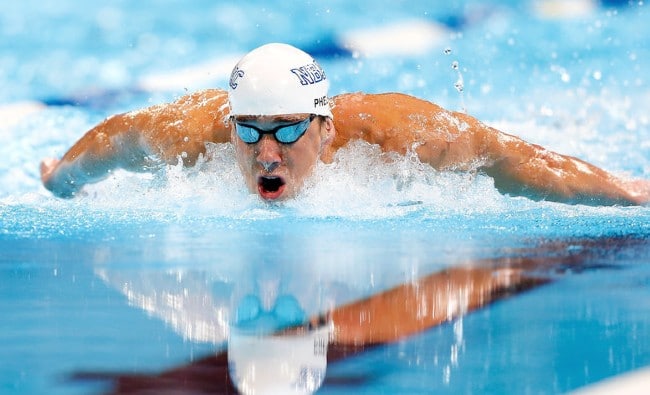
If you’re thinking of taking up swimming on a regular basis, here are a few awesome benefits to sink your teeth into.
The Key Benefits of Swimming
1. An Excellent Full-Body Workout
Because so many muscles are involved simultaneously, swimming develops strength and endurance across your whole body in a way that most single exercises can’t match. Different strokes shift the emphasis, breaststroke, freestyle, backstroke, and butterfly each load the muscles slightly differently, so varying your strokes gives you a well-rounded workout and keeps things interesting.
2. Outstanding Cardiovascular Fitness
Swimming is a superb aerobic exercise. It strengthens your heart, helps it pump blood more efficiently, and is associated with healthier blood pressure and improved cardiorespiratory fitness. Like other forms of cardio, regular swimming supports long-term heart health, but with the added bonus of being gentle on your body.
3. Low-Impact and Joint-Friendly
This is swimming’s signature advantage. Water supports up to around 90% of your bodyweight, so your joints, bones, and muscles take far less impact than they would running or jumping on land. That makes swimming ideal for people with arthritis, those recovering from injury, older adults, pregnant women (with medical clearance), and anyone carrying extra weight who finds high-impact exercise uncomfortable. You get the benefits of strenuous activity without the pounding.
4. Builds Muscular Endurance and Strength
The resistance of the water means every stroke is a form of resistance training, building muscular endurance and lean, functional strength throughout the body. It’s worth being realistic, though: swimming builds endurance and toned, capable muscles rather than the maximum size and strength you’d get from heavy lifting. If your goal is significant muscle growth, pair swimming with resistance training built around movements like the squat, using the volume principles in our guide on how many exercises per muscle group.
5. Burns Calories and Supports Weight Management
Swimming is an effective calorie burner. Depending on your intensity, stroke, and bodyweight, an hour of swimming can burn roughly 400 to 700 calories, comparable to running at a similar effort, but without the joint stress. Combined with a sensible diet, that makes it a genuinely useful tool for fat loss and body composition. As always, weight loss ultimately comes down to overall energy balance, which we cover in our guide on bulking vs cutting, so swimming works best as part of a controlled-calorie approach rather than as a licence to eat freely.
6. Improves Breathing Efficiency
Swimming is often said to “increase lung capacity,” but it’s worth being accurate here. Your total lung capacity is largely determined by your genetics and body size, and exercise doesn’t dramatically enlarge it. What swimming genuinely does is train your breathing: it strengthens the respiratory muscles, improves breath control and rhythm, and enhances how efficiently your body takes in and uses oxygen. The result is better cardiorespiratory fitness and breathing control, which is a real and valuable benefit, just not literally bigger lungs.
7. Enhances Flexibility and Mobility
Reaching, stretching, and rotating through each stroke takes your joints through a wide range of motion, which helps maintain and improve flexibility and mobility. Combined with the freedom of moving in water, swimming keeps you supple in a way many land-based workouts don’t. It complements a dedicated stretching routine nicely.
8. Great for Mental Health
Like all exercise, swimming releases endorphins, but the water adds something extra. Many people find the rhythmic, repetitive nature of swimming almost meditative, a chance to switch off and focus purely on breathing and movement. Research links swimming and aquatic exercise to reduced stress, anxiety, and low mood, making it as good for the mind as it is for the body.
9. Suitable for All Ages and Abilities
Few workouts are as inclusive. Swimming suits children learning coordination, adults staying fit, and seniors maintaining mobility, and it’s widely used in rehabilitation and by athletes as low-impact cross-training and active recovery. Whatever your age or starting point, there’s a way to swim that works for you.
An Honest Limitation to Keep in Mind
Swimming is excellent, but no single exercise does everything. Because it’s non-weight-bearing, the water supports you rather than your bones loading against gravity, it’s not an effective way to build bone density. Weight-bearing activities like walking, running, and resistance training are far better for strengthening bones. So while swimming is superb for your heart, muscles, and joints, it’s wise to include some weight-bearing exercise in your week too, especially as you age, for bone health.
How to Get Started With Swimming
Stay safe. Swim where it’s safe and supervised, never push to exhaustion in deep water, and always supervise children.
Start gradually. If you’re new or returning, begin with shorter sessions and build up as your fitness and technique improve.
Mix your strokes. Rotating between freestyle, breaststroke, and backstroke works different muscles and prevents boredom.
Focus on technique. Efficient technique makes swimming easier and more effective. A few lessons can transform your experience if you’re a beginner.
Use intervals. Alternating faster and slower laps, a form of interval training, boosts both fitness and calorie burn.
Frequently Asked Questions
Is swimming a good way to lose weight?
Yes, as part of a calorie-controlled diet. An hour of swimming can burn several hundred calories, and combined with sensible eating it’s an effective, joint-friendly way to support fat loss. Like any exercise, it works best alongside good nutrition.
Does swimming build muscle?
Swimming builds muscular endurance and lean, functional strength throughout the body thanks to water resistance. For significant muscle size and maximum strength, though, you’ll want to add resistance training, as swimming alone won’t match heavy lifting for hypertrophy.
Does swimming increase your lung capacity?
Not literally. Your lung capacity is mostly set by genetics and body size. What swimming does improve is your breathing efficiency, breath control, and cardiorespiratory fitness, which feels like better “lung power” even though your actual lung volume isn’t dramatically changing.
Is swimming good for bad joints?
Yes, it’s one of the best options. Because water supports most of your bodyweight, swimming lets you exercise hard with minimal joint impact, making it ideal for people with arthritis, joint pain, or those recovering from injury.
How often should I swim?
For general fitness, two to three sessions a week is a great starting point. You can adjust intensity and frequency based on your goals, building up gradually over time.
The Bottom Line
Swimming is one of the most complete and accessible workouts available. It trains your whole body, builds cardiovascular fitness, burns calories, improves flexibility and breathing efficiency, and lifts your mood, all while being remarkably kind to your joints. That rare combination makes it suitable for almost everyone, from beginners to elite athletes.
Just remember its one real blind spot, bone density, and round out your routine with some weight-bearing exercise. Do that, and regular swimming becomes one of the best long-term investments you can make in your health and fitness.