



ON THIS PAGE
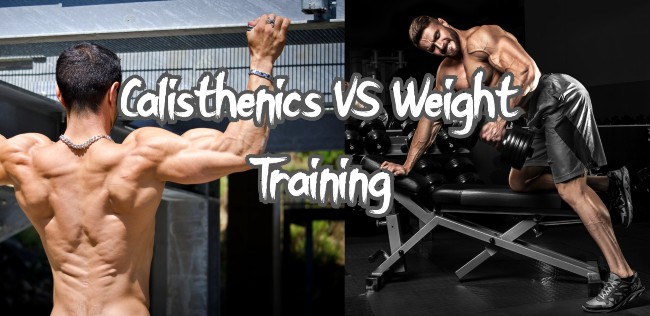
It’s one of the oldest debates in fitness: should you train with just your bodyweight, or pick up the iron? Calisthenics enthusiasts point to incredible feats of strength and control achieved with no equipment, while weightlifters tout the raw size and power that heavy loading builds. So which is actually better?
The honest answer, as with most things in fitness, is that it depends on your goals, and that the two aren’t really enemies at all. Here’s a complete, balanced comparison of calisthenics versus weights, what each does best, and how to choose.
This article is informational and not a substitute for individual medical or training advice.
What Are Calisthenics and Weight Training?
Both are forms of resistance training, they build muscle and strength by making your muscles work against resistance, but they create that resistance differently.
Calisthenics uses your own bodyweight and gravity as resistance. Think push-ups, pull-ups, dips, squats, and more advanced skills like muscle-ups and handstands. It typically requires little to no equipment, though a pull-up bar and, later, resistance bands expand your options considerably.
Weight training uses external resistance, free weights like dumbbells and barbells, or machines. It includes compound lifts like squats and deadlifts as well as isolation exercises like bicep curls that target a single muscle.
How Each Builds Muscle
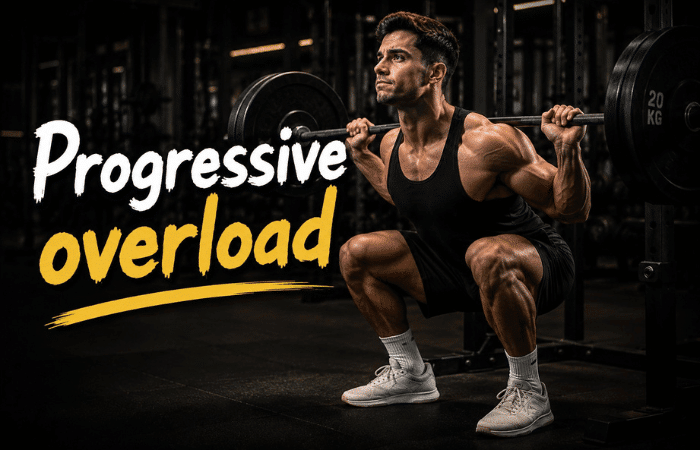
Muscle grows in response to tension and progressive overload, gradually increasing the demand on the muscle over time, regardless of where the resistance comes from. The difference lies in how you progress.
With weights, progression is simple and precise: you just add more weight. With calisthenics, you can’t simply load the bar, so you progress by moving to harder exercise variations, changing your leverage, adding reps, or eventually adding external load with a weighted vest or bands. Both approaches work, but this difference shapes what each is best at.

Calisthenics vs Weights: The Key Differences
Building Muscle Size
Both can build muscle, but weights have the edge for maximising size. Because you can load them precisely and progress in small increments, and because they let you isolate individual muscles, weights make it easier to drive the progressive overload that builds maximum mass, particularly for the legs, which are hard to challenge with bodyweight alone. Calisthenics absolutely builds an impressive, muscular upper body, but for pure size, especially in the lower body, weights are generally more effective.
Building Strength
For absolute, maximal strength, the ability to move the heaviest possible load, weights win, because you can simply keep adding weight. Calisthenics, on the other hand, builds exceptional relative strength: your strength in relation to your bodyweight, along with remarkable body control. The person who can do a one-arm pull-up has phenomenal strength of a different, and equally impressive, kind.
Functional Strength, Control, and Mobility
This is where calisthenics shines. Because bodyweight exercises require your entire body to move in unison and stabilise itself, they build outstanding functional strength, coordination, body control, and core stability. Many calisthenics skills also demand and develop mobility in the hips and shoulders. Weights, which often lock you into a fixed movement path, don’t train this whole-body coordination in quite the same way.
Convenience, Cost, and Accessibility
Calisthenics is the clear winner here. It requires little or no equipment, no gym membership, and can be done almost anywhere, at home, in a park, or in a hotel room. That makes it incredibly accessible and easy to stay consistent with. Weights require equipment and usually a gym, which costs money and ties you to a location.
Isolating Muscles and Fixing Weak Points
Weights have a distinct advantage when it comes to targeting specific muscles. Isolation exercises let you focus on a single muscle group, which is invaluable for correcting muscular imbalances, rehabilitating an injury, or bringing up a lagging body part. Calisthenics, being mostly compound movements, offers far less of this precise targeting.
Progression and Variety
Progressing with weights is straightforward: add load. Progressing with calisthenics is more skill-based, working toward harder variations, which many people find deeply motivating and engaging, since there’s always a new skill to chase and workouts rarely feel repetitive. Weight training can become monotonous over long periods, though its precise progression is easier to track.
At a Glance
| Calisthenics | Weights | |
|---|---|---|
| Resistance | Your bodyweight | External load |
| Best for | Relative strength, control, mobility | Maximum size and absolute strength |
| Muscle isolation | Limited | Excellent |
| Progression | Harder variations | Add weight (simple) |
| Equipment | Minimal or none | Weights or machines |
| Cost | Very low | Higher |
| Convenience | Train anywhere | Usually needs a gym |
Which Is Better for Your Goal?
- For maximum muscle size: weights, thanks to precise loading and isolation, especially for legs.
- For maximum strength: weights, since you can keep adding load.
- For relative strength, body control, and mobility: calisthenics.
- For convenience and training anywhere on a budget: calisthenics.
- For fixing imbalances or rehab: weights, for their isolation ability.
- For general fitness and health: honestly, either works brilliantly.
Can You Combine Them? (The Best Approach)
Here’s the key insight: you don’t have to choose. Combining calisthenics and weights gives you the best of both worlds, and for most people it’s the optimal approach. You might use weights for heavy, progressive lower-body and isolation work while using calisthenics for upper-body pushing and pulling, core, control, and skill development.
This hybrid approach builds size, strength, control, and mobility all at once. Bodyweight staples like push-ups and pull-ups sit happily alongside barbell lifts like the squat in the same programme, and structuring them sensibly is easy with a guide like our how many exercises per muscle group article.
Pros and Cons
| Pros | Cons | |
|---|---|---|
| Calisthenics | Free, portable, builds control and mobility, engaging | Harder to progress, weak for isolation and legs |
| Weights | Easy to progress, great for size and isolation | Needs equipment and a gym, less functional carryover |
Frequently Asked Questions
Is calisthenics better than weights for building muscle? For overall size, weights have the edge due to precise progressive overload and muscle isolation, especially for the legs. However, calisthenics builds a genuinely muscular upper body. Both build muscle, so the best choice depends on your goals.
Can you build muscle with just calisthenics? Yes, absolutely, particularly in the upper body. As long as you apply progressive overload by moving to harder variations over time, calisthenics builds real muscle. Legs and maximum size are the areas where it’s harder to progress without added load.
Which is better for beginners, calisthenics or weights? Both are excellent for beginners. Calisthenics is more accessible and cheaper to start, while weights offer easier, more measurable progression. Many beginners benefit from doing both.
Is calisthenics or weights better for fat loss? Both burn calories and build calorie-boosting muscle, so both support fat loss well. Fat loss ultimately depends on your overall diet and energy balance more than the training style you choose.
Should I do both calisthenics and weights? For most people, yes. Combining them gives you the size and strength benefits of weights alongside the control, mobility, and convenience of calisthenics. It’s often the most effective and well-rounded approach.
The Bottom Line
Calisthenics versus weights isn’t really a battle with a single winner. Weights excel at building maximum muscle size and absolute strength and at isolating specific muscles, while calisthenics excels at relative strength, body control, mobility, and sheer convenience. Both are outstanding forms of resistance training, and for general fitness, either will serve you well.
The smartest move for most people is to stop seeing them as rivals and combine them, using each for what it does best. Do that, and you’ll build a body that’s not only strong and muscular but also mobile, controlled, and capable, the best of both worlds.

Reda El Is a CSCS trainer, Registered Dietitian, ACE-certified nutritionist, With more than 12 years of experience, also he's a Brazilian Jiu-Jitsu competitor, he has done many articles and information sources on many authority sites, such as lifehack.org, Healthline, eat this, wealthygorilla.com, and more. He always keeps improving and updating his knowledge to help everyone to achieve their goals.
All articles by Reda Elmardi →