




ON THIS PAGE
Jumping jacks might take you straight back to school gym class, but don’t dismiss them as child’s play. This humble, equipment-free exercise is a genuinely effective full-body workout, used by everyone from the armed forces to elite athletes to get the heart pumping and the whole body moving. In just one simple, rhythmic motion, jumping jacks deliver cardio, coordination, and even bone-strengthening benefits.
Here’s a complete look at the real benefits of jumping jacks, who should be a little cautious, and how to do them properly.
This article is informational and not a substitute for individual medical advice.
What Are Jumping Jacks?
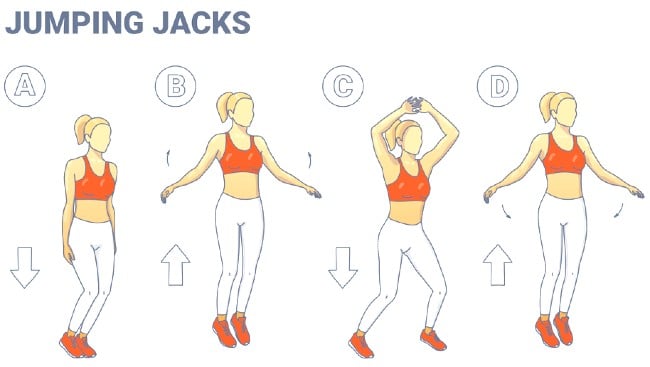
Jumping jacks, sometimes called star jumps, are a classic bodyweight exercise. You start standing with your feet together and arms by your sides, then jump your feet out to shoulder-width while simultaneously raising your arms overhead, before jumping back to the starting position. Repeated at a brisk pace, this becomes a rhythmic, whole-body movement.
They’re technically a plyometric exercise, meaning they involve explosive, jumping movement, which is part of what makes such a simple action so effective. It’s rare to find a single, equipment-free move that works so much of your body at once.
Muscles Worked
Jumping jacks are a true full-body exercise:
- Legs and hips: your quads, hamstrings, glutes, calves, and the hip abductors and adductors (outer hips and inner thighs) power the jumps.
- Shoulders and arms: your deltoids, traps, chest, and lats work as you raise and lower your arms.
- Core: your abdominal muscles engage to keep you balanced and stable throughout.
Few movements light up so many muscle groups in one go.
The Benefits Of Jumping Jacks:
1. A Full-Body Workout in One Move
The greatest appeal of jumping jacks is how much they achieve with such a simple action. Your legs power the jumps, your arms swing overhead, your shoulders stabilise the motion, and your core keeps you balanced, all at the same time. This makes them a fantastic, efficient way to work your entire body without any equipment or a long time commitment. For anyone who wants a quick, effective workout, few exercises offer such complete engagement from a single movement.
2. Excellent Cardiovascular Fitness
Because they rapidly elevate your heart rate, jumping jacks are a genuine cardiovascular exercise. Performing them repeatedly makes your heart and lungs work harder to deliver oxygen around your body, and doing them regularly builds your aerobic capacity and endurance. Research links this kind of consistent aerobic exercise to a lower resting heart rate, reduced blood pressure, and a decreased risk of cardiovascular disease. Like all good cardio, jumping jacks are a simple, accessible way to look after your heart, no gym required.
3. Burns Calories Efficiently
Jumping jacks are surprisingly effective calorie burners. Depending on your bodyweight and intensity, you can burn somewhere in the region of 8 to 16 calories per minute, which adds up quickly, especially when they’re part of a HIIT or circuit workout. Combined with a sensible diet, that makes them a useful tool for weight management and fat loss, all from a movement you can do anywhere.
4. They’re Weight-Bearing, So They Strengthen Bones
Here’s a benefit that sets jumping jacks apart from low-impact cardio like cycling and swimming. As a plyometric, weight-bearing exercise, the repeated impact of jumping and landing stimulates your bones to become stronger and denser. Research has found that jumping exercises can meaningfully improve bone density, which makes jumping jacks genuinely valuable for maintaining strong bones and helping guard against osteoporosis as you age, much like jumping rope.
5. Strengthens Your Hips
One of the more underrated benefits of jumping jacks is how they work your hips. By moving your legs out and back in with each jump, they train hip abduction and adduction, strengthening the outer hip and inner thigh muscles that are often neglected in other exercises. Strong hips are important for stability, athletic movement, and injury prevention, making this a quietly valuable perk.
6. Improves Coordination and Balance
Though they seem mindless, jumping jacks actually challenge your coordination. Moving your arms and legs in sync while staying balanced and keeping your core engaged trains your brain and nervous system to work together smoothly. Over time, this improves your coordination, balance, and body control, which supports athletic performance and, as you age, helps reduce the risk of trips and falls.
7. A Perfect Warm-Up
Jumping jacks are one of the best warm-up exercises around. Their dynamic, full-body nature quickly raises your body temperature, increases your circulation, and primes your muscles and joints for the workout ahead. A few sets are an excellent way to get your body ready before strength training or sport, and they pair well with a proper dynamic stretchingroutine.
8. Accessible, Scalable, and Mood-Boosting
Finally, jumping jacks are wonderfully accessible. They need no equipment and very little space, scale to any fitness level, and can be modified to be easier or harder. And like all exercise, they release mood-boosting endorphins, so a quick set is a great way to shake off stress and lift your energy. There’s something genuinely uplifting about the simple, rhythmic movement.
Who Should Be Cautious?
For all their benefits, jumping jacks are high-impact, and that’s worth keeping in mind. The repeated jumping and landing places stress on your knees, ankles, hips, and lower back, so they may not suit everyone. If you have joint pain or injuries, back problems, heart conditions, or you’re pregnant, it’s wise to check with a healthcare professional first and consider a gentler option.
The good news is that jumping jacks are easily modified: performing “step jacks,” where you step your feet out and in rather than jumping while still moving your arms, gives you most of the benefits with far less impact. Always land softly with slightly bent knees to protect your joints.scles and your core mainly, which will help you in many other ways in the outside world too.
How to Do Jumping Jacks With Good Form
- Stand tall with your feet together and your arms by your sides.
- Jump your feet out to about shoulder-width apart while simultaneously raising your arms out and overhead.
- Land softly on the balls of your feet with slightly bent knees.
- Immediately jump back to the starting position, bringing your feet together and lowering your arms.
- Repeat at a steady, controlled pace, keeping your core engaged and breathing steadily.
Aim for smooth, soft landings and full range of motion with your arms and legs.
Jumping Jack Variations
- Step jacks: a low-impact version, stepping rather than jumping, ideal for beginners or those protecting their joints.
- Squat jacks: landing in a squat position to hit the legs and glutes harder.
- Plank jacks: jumping your feet in and out from a plank position for a core-focused twist.
- Power jacks: adding a squat and an explosive, maximum-height jump for advanced intensity.
Frequently Asked Questions
Are jumping jacks good for weight loss? Yes. They burn calories efficiently, around 8 to 16 per minute depending on intensity, and combined with a calorie-controlled diet, they’re a useful, accessible tool for fat loss, especially within a HIIT or circuit workout.
What muscles do jumping jacks work? They’re a full-body exercise, working your legs (quads, hamstrings, glutes, calves), your hip abductors and adductors, your shoulders and arms, and your core, all while giving your heart a cardio workout.
Are jumping jacks bad for your knees? They’re high-impact, so they can stress the knees, ankles, and hips, particularly with poor form or existing joint issues. Landing softly with bent knees helps, and low-impact “step jacks” are a great alternative for sensitive joints.
How many jumping jacks should I do? A common approach is performing them for timed intervals, such as 30 to 60 seconds, within a workout or warm-up, repeated for several sets. Beginners should start with shorter sets and build up as their fitness improves.
Do jumping jacks build muscle? They build muscular endurance and help tone the muscles, and being weight-bearing, they strengthen bones. For significant muscle size and strength, though, you’ll want resistance training, as jumping jacks are primarily a cardio and conditioning exercise.
The Bottom Line
Jumping jacks prove that the simplest exercises can be some of the most effective. In one easy, equipment-free movement, they deliver a full-body workout, boost your cardiovascular fitness, burn calories, strengthen your bones and hips, and sharpen your coordination, all while being scalable to any level and doable almost anywhere.
Just land softly, mind your joints, and opt for the low-impact step version if you need to. Whether you use them as a warm-up, a cardio burst, or part of a circuit, jumping jacks are a genuinely worthwhile addition to your fitness routine, a childhood classic that still delivers well into adulthood.

I'm Tomek, your dedicated fitness coach at TheGymGoat. With years of experience as a certified personal trainer, fitness blogger and a passion for empowering individuals, I'm committed to helping you reach your health and wellness goals. I don't do excuses, I make priorities and always base my workout and diet on reserach.
All articles by Tomek →