




ON THIS PAGE
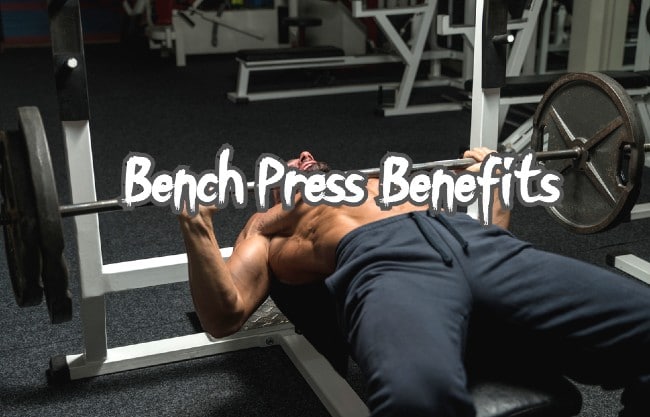
Walk into almost any gym on the planet and you will find someone lying back on a bench, gripping a barbell, and pressing it toward the ceiling. The bench press is that universal. It has outlasted training fads, equipment trends, and decades of changing coaching philosophy, and it remains the lift most people use to measure upper-body strength.
There is a reason for that staying power. The bench press builds the chest, develops real pressing strength, and carries over to almost everything you do with your arms in front of your body. Below, we break down what the lift actually delivers, where the popular claims hold up, and where they need a little honesty.
Reviewed from a strength and conditioning perspective. This article is educational and is not a substitute for individual medical or training advice.
A Quick History of the Bench Press
The movement we recognise today did not appear fully formed. Its earliest ancestor was the floor press, popularised around the turn of the twentieth century by strongman George “The Russian Lion” Hackenschmidt, who reportedly pressed a loaded barbell off the floor while lying on his back.
As more lifters chased bigger numbers, a looser style called the “belly toss” took over. By bridging the hips and using momentum from the torso, lifters could heave far more weight off the ground. It was effective for ego and useless for honest strength comparison, which is why influential figures in early weightlifting pushed back against it. The technique was effectively banned from competition by the late 1930s.
Benches and racks changed everything. Once lifters could set up under a fixed bar at a comfortable height, the modern flat barbell bench press emerged, and gyms never looked back. Adjustable benches brought incline and decline angles, dumbbells opened up new ranges of motion, and the golden era of bodybuilding cemented the lift as the headline chest exercise it still is.
What Muscles Does the Bench Press Work?
Although most people think of it as a chest exercise, the bench press is a compound movement that recruits several muscle groups at once.
| Muscle group | Role during the press |
|---|---|
| Pectoralis major | Prime mover; drives the bar away from the chest |
| Triceps brachii | Extends the elbows through the lockout |
| Anterior deltoids | Assist the press, especially near the chest |
| Lats and upper back | Stabilise the shoulders and create a solid base |
| Core | Braces the torso and keeps the bar path stable |
This recruitment pattern is exactly why the bench earns its place alongside the deadlift and the squat in most serious programmes. It trains a large amount of muscle through one efficient movement.
So, What Are The Bench Press Benefits?
1. Bigger, Stronger Pressing Power
Every time you bench, you are training your ability to push resistance away from your torso. That pattern shows up constantly, both in the gym and in daily life, from pushing a heavy door to bracing against a load. Because the triceps contribute so much to the lockout, a stronger bench typically means stronger overhead pressing, dips, and even certain pulling-adjacent movements that rely on shoulder stability.
2. Real Upper-Body Strength
Pressing a meaningful load off your chest is no small task. Progressive overload on the bench, adding small amounts of weight or reps over time, builds the chest, shoulders, and triceps in a coordinated way. Few upper-body exercises let you load this heavily while keeping good control, which is part of why it remains a benchmark lift.
3. Muscle Growth Across the Chest
If your goal is a fuller, more developed chest, the bench press should anchor your chest day. It directly targets the pectorals while adding work for the triceps and front delts. Pairing it with dumbbell chest exercises helps you train a longer range of motion and address each side independently, which is useful if one side tends to dominate.
4. A Genuine Compound Lift
A machine chest press isolates the chest along a fixed track. The free-weight bench press does the opposite. Your stabilisers, triceps, shoulders, and back all have to contribute, which is what makes it so productive for overall upper-body development. That is also why it features in respected programmes like the PHAT workout and the PHUL routine, both built around heavy compound pressing.
5. Calorie Burn and Body Composition
People often forget that resistance training contributes to fat loss too. Heavy compound lifts demand energy during the session and support lean muscle, which influences your resting metabolism over time. Cardio still has its place, but you do not have to choose. The bench press pulls its weight on the strength side of a balanced programme.
6. Easy to Learn, Hard to Master
The basic pattern is simple. Unrack the bar, lower it under control to the chest, and press it back up without bouncing. That accessibility is a genuine benefit, because beginners can start safely and progress quickly. The refinements, such as leg drive, scapular positioning, and bar path, are what keep advanced lifters busy for years.
7. Endless Variations
Boredom kills consistency. The bench press solves that with sheer variety: flat, incline, and decline angles, barbell and dumbbell versions, and machine or Smith-machine options. If you train on a Smith machine, it is worth knowing how much the bar weighs on a Smith machine so your numbers stay honest. Rotating variations keeps training fresh and hits the chest from slightly different angles.
8. Hitting Every Angle of the Chest
A complete chest is not built on one angle. Each variation shifts the emphasis:
| Variation | Primary emphasis | Best suited for |
|---|---|---|
| Flat barbell bench | Mid and overall chest, max load | Building strength and total mass |
| Incline press | Upper chest | Filling out the collarbone area |
| Decline press | Lower chest | Lower-pec development and triceps |
| Dumbbell press | Range of motion, symmetry | Stretch, control, fixing imbalances |
If a barbell decline feels awkward or your gym lacks the setup, there are solid decline bench press alternatives that train the same region.
9. Confidence and Measurable Progress
Ego-lifting has no place in a smart programme, and chasing numbers without control is how people get hurt. That said, hitting a clean new personal best is genuinely motivating. A controlled, well-supported one-rep effort, ideally with a spotter, gives you a clear marker of progress and a reason to keep showing up.
10. Bone and Joint Health
Resistance training is well supported for maintaining bone mineral density, which matters more as you age and bone tends to thin. Loading the skeleton through pressing movements is part of a sensible long-term strategy against age-related bone loss and conditions such as osteopenia and osteoporosis.
One honest correction worth making: brittle bone disease (osteogenesis imperfecta) is a genetic condition, not something lifting prevents. Training supports bone density in the general sense, but it is not a cure for inherited disorders. Treat any specific medical concern as a conversation for your doctor.
11. Joint Resilience, With Sensible Technique
Done with good form and appropriate loading, pressing can support the strength of the muscles and connective tissue around the shoulder and elbow, which contributes to joint resilience over time. The flip side is real: poor form, excessive volume, or ego loading can aggravate the shoulders. Warming up properly, including some targeted stretching and mobility work, protects those joints far more than any single exercise does.
12. You Can Train It Safely Solo
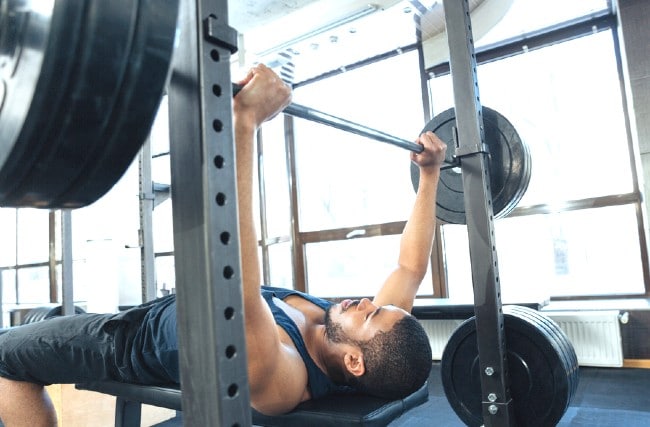
Heavy benching is safest with a spotter. When one is not available, a power rack or squat rack with adjustable safety bars set at the right height lets you bail out of a failed rep without risk. This single setup detail makes serious solo training far safer.
13. Hormonal Response
Heavy compound lifts, including the bench press, squat, and deadlift, produce an acute rise in anabolic hormones such as testosterone and growth hormone after training. It is worth keeping expectations realistic here. Research suggests these short-term spikes play a smaller role in muscle growth than total training volume, consistency, recovery, and nutrition. In other words, the hormonal bump is a nice bonus, not the main engine.
14. Aesthetics and a Better Fit
A developed chest and bigger triceps simply fill out a shirt better, and a stronger upper body improves your overall shape. For many lifters, looking the part is a perfectly valid motivator, and the bench press is one of the most direct routes to a fuller upper body.
15. A Stronger, More Stable Core
It is easy to overlook, but a heavy free-weight bench press demands real core bracing. Your trunk stabilizes the load and keeps the bar path level, especially with dumbbells. It will never replace dedicated core work, but it adds useful stabilization training on top of everything else.
16. Adaptable to Almost Anyone
From a first-time lifter to a seasoned powerlifter, the bench scales to the person. Dealing with cranky shoulders or a minor niggle? Switching to dumbbells, adjusting the bench angle, or using a machine can reduce strain while keeping you training. That adaptability is a big part of why the lift has such universal appeal.
How to Program the Bench Press
For most lifters chasing both size and strength, two to three pressing sessions per week works well, with the bench as the centrepiece of at least one of them. A practical structure looks like this:
- Strength focus: 3 to 5 sets of 3 to 6 reps with heavier loads
- Hypertrophy focus: 3 to 4 sets of 8 to 12 reps with moderate loads
- Accessory support: incline or dumbbell pressing, dips, and push-ups to round out the chest and triceps
If you are unsure how much chest and pressing volume to run each week, our guide on how many exercises per muscle group helps you set sensible targets. The bench also slots naturally into a push/pull/legs split, where it leads your push days.
Common Bench Press Mistakes to Avoid
- Bouncing the bar off the chest. This robs the muscles of tension and risks injury. Lower under control and touch lightly.
- Flaring the elbows to 90 degrees. A slightly tucked elbow angle is friendlier to the shoulders.
- Skipping leg drive and back tightness. A stable base lets you press more safely and with better mechanics.
- Training only the flat bench. Without incline, decline, and dumbbell work, chest development tends to look uneven.
- Loading the ego instead of the muscle. Progress comes from consistent, controlled overload, not from numbers you cannot truly control.
Is the bench press enough on its own for a complete chest?
No single exercise builds a balanced chest. The flat bench is an excellent foundation, but adding incline work, dumbbell variations, and movements like dips gives you fuller development across all regions of the pecs.
How often should I bench press?
Most lifters do well pressing two to three times per week, with adequate recovery between heavy sessions. Beginners often progress on less, while experienced lifters may spread volume across more sessions.
Is the bench press safe for my shoulders?
For most people, yes, when form and loading are sensible. If you have a history of shoulder issues, dumbbells, a neutral grip, or an adjusted bench angle can reduce strain. Persistent pain is a reason to check in with a qualified professional rather than train through it.
Barbell or dumbbell bench press, which is better?
They complement each other. The barbell lets you load the most weight for raw strength, while dumbbells offer a longer range of motion, train each side independently, and help correct imbalances. Using both over time is the strongest approach.
Can I build a big chest without a spotter?
Yes, provided you set up in a power rack with the safety bars at the correct height. That lets you fail a rep safely and train heavy without a partner present.
The Bottom Line
The bench press has earned its reputation. It builds the chest, develops genuine upper-body and pressing strength, supports bone and joint health, and adapts to almost any lifter or goal. The popular claims around it are mostly well founded, as long as you keep the hormonal and bone-health hype in perspective and respect the technique.
Treat it as the cornerstone of your pressing work, rotate your angles, control the load, and progress patiently. Do that, and the oldest trick in the chest-training book will keep delivering for years.

Reda El Is a CSCS trainer, Registered Dietitian, ACE-certified nutritionist, With more than 12 years of experience, also he's a Brazilian Jiu-Jitsu competitor, he has done many articles and information sources on many authority sites, such as lifehack.org, Healthline, eat this, wealthygorilla.com, and more. He always keeps improving and updating his knowledge to help everyone to achieve their goals.
All articles by Reda Elmardi →