



ON THIS PAGE
When we’re young, we can train hard, bash our bodies around, and wake up the next day barely sore. As the years go by, recovery becomes a bigger priority, and looking after your muscles between sessions starts to really matter. That’s where the foam roller earns its place.
Foam rolling is a form of self-myofascial release, a simple technique that has become a staple of warm-ups and recovery routines everywhere. It’s cheap, portable, and genuinely useful, but it’s also surrounded by myths. Here’s an honest, evidence-based look at what a foam roller actually does, what it doesn’t, and how to use one well.
This article is informational and not a substitute for individual medical or training advice.
What Is a Foam Roller?
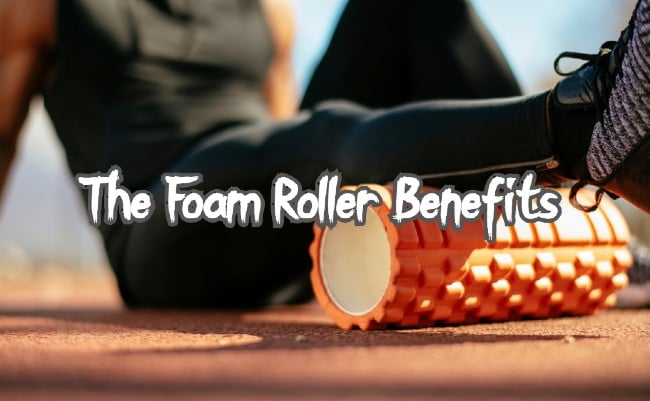
A foam roller is exactly what it sounds like: a dense cylinder of foam, sometimes built around a firm plastic core, that you roll your muscles over using your bodyweight to apply pressure. There’s nothing to charge, nothing to break, and nothing to go wrong. That simplicity is part of its appeal.
A quick note on how it works, because this is where most articles overstate things. Foam rolling does not physically “break up” knots, adhesions, or scar tissue, despite the popular claim. The current understanding is that its benefits come mainly through your nervous system, reducing the sensation of muscle tension and soreness, and through a temporary increase in local blood flow. The effects are real and useful; the mechanism is just different from the myth.
The Main Benefits of Foam Rolling
1. Temporarily Improves Range of Motion
This is one of foam rolling’s best-supported benefits. Rolling a muscle before training produces a short-term increase in range of motion and flexibility, and crucially, it does so without the temporary strength loss that can follow static stretching before a workout. That makes it an excellent addition to a warm-up when you want to move more freely without blunting performance.
2. Eases Muscle Soreness and Aids Recovery
Research consistently shows that foam rolling can reduce delayed onset muscle soreness (DOMS) and improve how recovered you feel in the days after hard training. Rolling out tired, achy muscles genuinely helps them feel better, which is why so many people use it after a tough session. It won’t erase soreness entirely, but it’s a legitimate recovery tool.
3. A Great Warm-Up Tool
A few minutes of foam rolling before training boosts local blood flow, raises tissue temperature, and helps tight muscles feel looser and more ready to work. Combined with some dynamic movement and stretching, it’s an effective way to prepare your body for exercise.
4. Increases Local Blood Flow
Rolling a muscle temporarily increases circulation to the area. Better blood flow delivers oxygen and nutrients to the tissue and supports the feeling of looseness and reduced tension that follows a rolling session. It’s part of why foam rolling feels so good on tired legs.
5. Promotes Relaxation
Foam rolling can have a genuinely calming, tension-relieving effect. Taking a few minutes to slowly work through tight areas at the end of the day helps many people unwind both physically and mentally, making it a nice addition to a wind-down routine.
6. May Support Athletic Performance
By improving short-term mobility and helping you feel looser and more recovered, foam rolling can support your training and athletic performance indirectly. It’s especially handy as a quick mobility primer before activities that demand a good range of motion.
7. Quick and Time-Efficient
A solid full-body foam rolling session takes only around 5 to 10 minutes. For something that helps you warm up, move better, and recover, that’s a small time investment with a worthwhile return, even on the busiest days.
8. Endless Variety of Techniques
You can foam roll almost any major muscle group: calves, quads, hamstrings, glutes, lats, upper back, and more. With so many techniques and target areas, you can build a routine around whatever feels tight or needs attention, and adapt it session to session.
9. Affordable and Accessible
Foam rollers are among the cheapest pieces of fitness kit there is, with basic models available for under ten dollars and higher-end textured versions costing more. Compared with most gym equipment, they’re a tiny investment. They sit alongside resistance bands as brilliant value-for-money training tools.
10. Portable and Reliable
Foam rollers are light, simple, and durable, with no batteries, electronics, or apps to fail. You can use one at home, at the gym, in the garden, or pack it for travel. It just works, every time, which is more than can be said for a lot of fitness tech.
How to Foam Roll Properly
Getting the most from a foam roller comes down to a few simple principles:
- Roll slowly. Move along the muscle at a controlled pace rather than racing back and forth.
- Pause on tender spots. When you find a tight or tender area, hold gentle, sustained pressure on it for 20 to 30 seconds rather than grinding aggressively.
- Breathe and relax. Tensing up works against the goal. Stay relaxed and breathe steadily.
- Roll muscles, not joints or bones. Avoid rolling directly over joints, and importantly, do not foam roll your lower (lumbar) spine. Target the large muscles instead.
- Keep it comfortable. Some discomfort is normal on tight areas, but sharp pain is a signal to ease off. More pressure is not always better.
A short session before training to warm up, or after to aid recovery, is all most people need.
Does foam rolling actually work?
Yes, for what it genuinely does: temporarily improving range of motion, reducing muscle soreness, and helping muscles feel looser and more recovered. The benefits are real, even though it doesn’t physically break up knots or scar tissue the way some claims suggest.
Should I foam roll before or after a workout?
Both can help. Before training, it’s a useful warm-up that improves mobility without sapping strength. After training, it can ease soreness and support recovery. Many people use it at both ends of a session.
Does foam rolling hurt, and should it?
Tight areas can feel tender, and mild discomfort is normal. Sharp or intense pain is not the goal, though. If it hurts a lot, reduce the pressure. Rolling harder doesn’t make it more effective.
Can I foam roll every day?
Yes. Foam rolling is gentle enough to do daily, whether as part of your warm-up, your cool-down, or simply to relieve tension. Just avoid aggressive rolling over the same sore spot repeatedly.
Should I foam roll my lower back?
No, avoid rolling directly on your lower (lumbar) spine, as it isn’t well supported and can cause the muscles to tense protectively. You can roll your upper back and your glutes, which often relieves tension that’s felt in the lower back, but keep the roller off the lumbar area itself.
Will foam rolling get rid of cellulite?
There’s no good evidence that foam rolling reduces cellulite. It may temporarily change how skin looks by increasing blood flow, but it isn’t a treatment for cellulite, so don’t rely on it for that.
The Bottom Line
The foam roller is one of the best-value tools in fitness. Used sensibly, it improves your short-term mobility, eases muscle soreness, supports recovery, and helps you feel looser before and after training, all from a cheap, simple, portable piece of foam. Just go in with realistic expectations: it’s a genuine recovery and mobility aid, not a miracle device that melts knots or cellulite.
Roll slowly, target your muscles rather than your joints, keep the pressure comfortable, and make it a regular part of your warm-up and recovery. For the price, there’s very little reason not to own one.

Reda El Is a CSCS trainer, Registered Dietitian, ACE-certified nutritionist, With more than 12 years of experience, also he's a Brazilian Jiu-Jitsu competitor, he has done many articles and information sources on many authority sites, such as lifehack.org, Healthline, eat this, wealthygorilla.com, and more. He always keeps improving and updating his knowledge to help everyone to achieve their goals.
All articles by Reda Elmardi →