




ON THIS PAGE
When it comes to building bigger, stronger biceps, few exercises are as respected as the preacher curl. By locking your arms into a fixed, supported position, it strips away the swinging and momentum that plague ordinary curls, forcing your biceps to do the work in strict isolation. It’s a favourite of bodybuilders and everyday lifters alike, and for good reason.
Here’s a complete look at the real benefits of preacher curls, their honest drawbacks, and exactly how to perform them for the best results.
This article is informational and not a substitute for individual medical or training advice.
What Is a Preacher Curl?
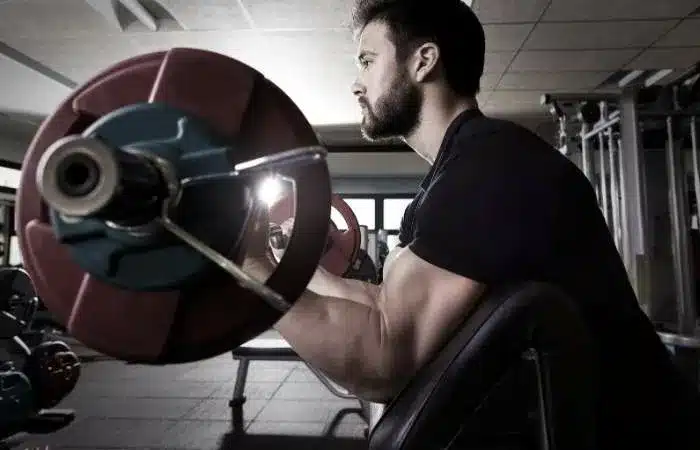
The preacher curl is a biceps isolation exercise performed on a preacher bench, an angled pad that your upper arms rest against while you curl a weight, typically an EZ-bar, barbell, or dumbbell. With your arms braced on the pad in front of your body, the movement isolates the biceps and prevents the cheating that creeps into standing curls.
It’s a move with real pedigree. The preacher curl was developed in the 1960s by the legendary trainer Vince Gironda, the “Iron Guru,” who used it with his protégé Larry Scott, the very first Mr. Olympia, whose extraordinary arms became the stuff of legend. Decades later, it remains a staple of arm training everywhere.
Muscles Worked
The preacher curl is a targeted arm exercise:
- Biceps brachii: the primary mover, and the muscle the exercise is built around. The preacher curl places particular emphasis on the lower portion of the biceps.
- Brachialis: a muscle beneath the biceps that adds thickness to the upper arm.
- Brachioradialis and forearm flexors: work as secondary muscles to curl the weight and grip the bar.
Your front deltoids also help stabilise your upper arm against the pad. The result is a movement that builds fuller, more defined arms.
The Key Benefits of Preacher Curls
1. Superior Biceps Isolation
This is the preacher curl’s defining benefit. Resting your arms on the angled pad locks them in place, which means you physically cannot swing the weight up using your hips, back, or shoulders. With momentum removed from the equation, your biceps are forced to do virtually all the work, delivering an intensely focused, isolated contraction. For anyone whose main goal is bigger, stronger biceps, that pure isolation is hard to beat.
2. Strict Form and Better Control
Because the bench holds your upper body stable, the preacher curl naturally enforces strict, controlled technique. Ordinary standing curls invite you to cheat, using a little body English to heave the weight up, but the preacher curl makes that nearly impossible. This teaches you to control the weight through the whole movement, both lifting and lowering, which not only builds the biceps more effectively but also carries over to better form on your other exercises.
3. Emphasises the Lower Biceps and Stretch
The position of the preacher curl, with your arms angled forward and down, places your biceps under a strong stretch at the bottom of each rep. Training a muscle through a lengthened, stretched position is excellent for growth, and this particular emphasis targets the lower part of the biceps and the brachialis. The payoff is a fuller-looking biceps that fills out the gap toward the elbow, contributing to that complete, well-developed arm.
4. A Powerful Mind-Muscle Connection
The strict, isolated nature of the preacher curl makes it one of the best exercises for developing a strong mind-muscle connection with your biceps. Free from the distraction of stabilising your whole body, you can focus entirely on feeling your biceps contract and stretch on every rep. This deliberate, quality-over-quantity approach often produces far better results than churning out sloppy standing curls, and it’s a big part of why the exercise is so effective.
5. Comfortable and Wrist-Friendly
Preacher curls are also a comfortable, joint-considerate way to train the biceps. The supported position feels stable and natural, and when you use an EZ-bar, its angled “W” shape lets your wrists sit at a more comfortable angle than a straight bar, reducing wrist strain. This makes the movement accessible and pleasant to perform for most people.
6. Versatile and Adaptable
The preacher curl can be performed in several ways to suit your goals and equipment. A barbell or EZ-bar allows for heavier loading and strength progression, single-arm dumbbell preacher curls are excellent for ironing out strength imbalances between your arms, cable versions provide constant tension throughout the movement, and machine preacher curls offer added stability and safety, which is ideal for beginners. This adaptability lets you find the version that works best for you.
-

17 Brilliant Bench Press Benefits To Keep In Mind
Walk into almost any gym on the planet and you will find someone lying back on a bench, gripping a barbell, and pressing it toward the ceiling. The bench press is that universal. It has outlasted training fads, equipment trends, and decades of changing coaching philosophy, and it remains the lift most people use to…
-
16 Power Clean Benefits: Why This Explosive Lift Deserves a Place in Your Training
Walk into most commercial gyms and you’ll notice something missing: bumper plates, lifting platforms, and anyone actually doing Olympic lifts. That’s a shame, because the power clean is one of the most effective full-body exercises there is, and most lifters never touch it. The power clean builds explosive power, full-body strength, and serious athleticism in…
-
Benefits of Sprinting: Why Short, Fast Runs Are Worth the Effort
When most people picture running, they imagine a steady jog around the block or a monotonous stretch on the treadmill. Sprinting is a different animal entirely. It’s running at near-maximum effort in short, explosive bursts, and it delivers a remarkable range of benefits in very little time. It’s also hard, which is exactly why so…



The Honest Drawbacks
No exercise is perfect, and being straight about the preacher curl’s downsides helps you use it safely and wisely:
- It can stress the elbows. The stretched position at the bottom, especially under heavy load, places significant strain on the elbow and biceps tendon. Going too heavy, bouncing out of the bottom, or aggressively straightening your arm can risk injury. Use a controlled weight and never snap into full extension at the bottom.
- Tension drops at the top. With a barbell or EZ-bar, the resistance eases off near the top of the movement as your forearms become vertical, so the peak contraction is less challenged. Cable and machine versions help maintain tension throughout.
- It’s an accessory, not a mass-builder on its own. As an isolation exercise, the preacher curl is a superb addition to your arm training, but it shouldn’t be your only biceps work. Compound pulling movements like pull-ups and chin-ups build the biceps too and should form part of a complete arm routine.
How to Do a Preacher Curl
- Set the preacher bench so the top of the pad sits comfortably under your armpits.
- Grip an EZ-bar with an underhand grip, hands slightly wider than shoulder-width, and rest the backs of your upper arms flat on the pad.
- Start with your arms extended but with a slight bend still in the elbows, not fully locked out.
- Curl the bar up toward your shoulders by contracting your biceps, keeping your upper arms pressed into the pad.
- Squeeze your biceps at the top, then lower the weight slowly and under control back to the start.
Keep the movement smooth and deliberate throughout, and let your biceps, not momentum, do the work.
Common Mistakes to Avoid
- Using too much weight. This forces poor form and increases injury risk. Choose a weight you can control.
- Bouncing out of the bottom. Jerking the weight up from full extension strains the elbow. Lower under control and reverse smoothly.
- Hyperextending at the bottom. Snapping your arms completely straight under load stresses the biceps tendon. Keep a slight bend.
- Lifting your arms off the pad. Keep your upper arms planted to maintain isolation and avoid cheating.
- Rushing the reps. Slow, controlled tempo beats fast, sloppy repetitions every time.
Preacher Curls vs Regular Curls
Both belong in a well-rounded arm routine. Regular standing curls let you lift heavier and offer a fuller range of motion at the top, but they allow momentum and cheating. Preacher curls sacrifice a little of that range and top-end tension in exchange for far stricter isolation and control. Rather than choosing one, most people benefit from including both, along with other options from our guide on preacher curl alternatives to keep your biceps training varied and complete.
Frequently Asked Questions
What do preacher curls work? Preacher curls primarily target the biceps brachii, with particular emphasis on the lower biceps, along with the brachialis and the forearm muscles as secondary movers. They isolate the biceps more strictly than standing curls.
Are preacher curls better than regular curls? Neither is simply better, they serve different purposes. Preacher curls offer stricter isolation and control, while regular curls allow heavier loading and more range of motion. Using both gives you the most complete biceps training.
Why do preacher curls hurt my elbows? The stretched position at the bottom places strain on the elbow and biceps tendon, especially with heavy weight or if you snap your arms straight. Use a lighter, controlled weight, keep a slight bend at the bottom, and avoid bouncing to protect your elbows.
Should I use a barbell or dumbbells for preacher curls? A barbell or EZ-bar allows heavier loading, while dumbbells are excellent for correcting imbalances between your arms since each side works independently. Both are effective, so it depends on your goals.
Are preacher curls enough to build big biceps? They’re a fantastic isolation exercise, but not on their own. For fully developed biceps, combine preacher curls with compound pulling exercises like chin-ups and rows, and vary your curl types over time.
The Bottom Line
The preacher curl is a time-tested, highly effective exercise for building bigger, stronger, more defined biceps. Its supported position enforces strict isolation, eliminates cheating, emphasises the lower biceps through a strong stretch, and builds a powerful mind-muscle connection, all of which make it one of the best biceps exercises around.
Just respect its drawbacks: use a controlled weight to protect your elbows, avoid snapping into full extension, and treat it as one valuable part of a complete arm routine that also includes compound pulls. Do that, and the preacher curl will reward you with the kind of arms that Larry Scott himself would have approved of.

I'm Tomek, your dedicated fitness coach at TheGymGoat. With years of experience as a certified personal trainer, fitness blogger and a passion for empowering individuals, I'm committed to helping you reach your health and wellness goals. I don't do excuses, I make priorities and always base my workout and diet on reserach.
All articles by Tomek →